plants use sunlight as energy to convert carbon dioxide and water into glucose and oxygen. which best…
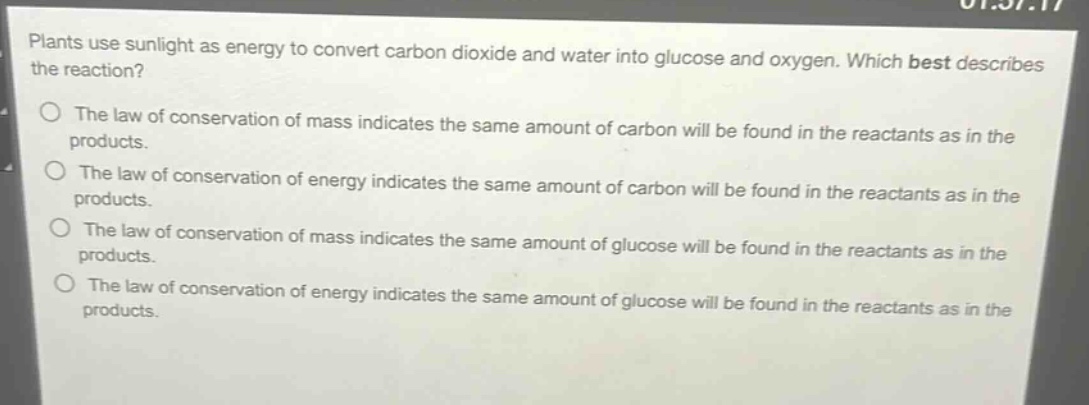
plants use sunlight as energy to convert carbon dioxide and water into glucose and oxygen. which best describes the reaction?\nthe law of conservation of mass indicates the same amount of carbon will be found in the reactants as in the products.\nthe law of conservation of energy indicates the same amount of carbon will be found in the reactants as in the products.\nthe law of conservation of mass indicates the same amount of glucose will be found in the reactants as in the products.\nthe law of conservation of energy indicates the same amount of glucose will be found in the reactants as in the products.
Answer
Brief Explanations:
The law of conservation of mass states that in a chemical reaction, the total mass of the reactants equals the total mass of the products, and the amount of each element is conserved. Carbon is an element involved in the photosynthesis reaction where plants convert carbon - dioxide and water into glucose and oxygen. Glucose is a product and not present in the reactants in the same form. The law of conservation of energy is about energy transformation, not mass - element conservation in this context.
Answer:
The law of conservation of mass indicates the same amount of carbon will be found in the reactants as in the products.