a population of snakes that eat small rodents enters a new habitat. in the new habitat, there are many…
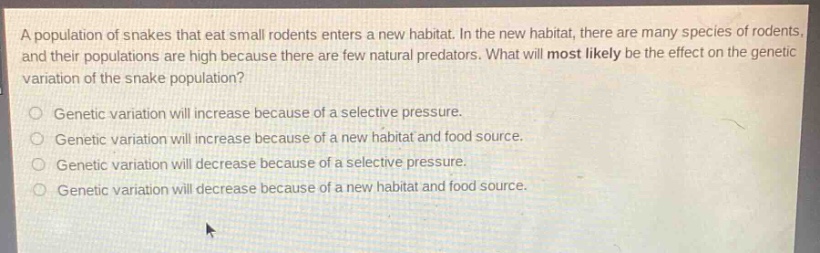
a population of snakes that eat small rodents enters a new habitat. in the new habitat, there are many species of rodents, and their populations are high because there are few natural predators. what will most likely be the effect on the genetic variation of the snake population?\ngenetic variation will increase because of a selective pressure.\ngenetic variation will increase because of a new habitat and food source.\ngenetic variation will decrease because of a selective pressure.\ngenetic variation will decrease because of a new habitat and food source.
Answer
Answer:
Genetic variation will increase because of a new habitat and food source.
Brief Explanations:
In a new habitat with diverse food (many rodent - species), more traits may be favored, increasing genetic variation. There is no indication of a selective pressure reducing variation. The availability of multiple food sources and a new environment can lead to different snakes with different traits being able to survive and reproduce, thus increasing genetic variation in the snake population.