the punnett square shows a text cross of mice that are heterozygous for both traits. what will their…
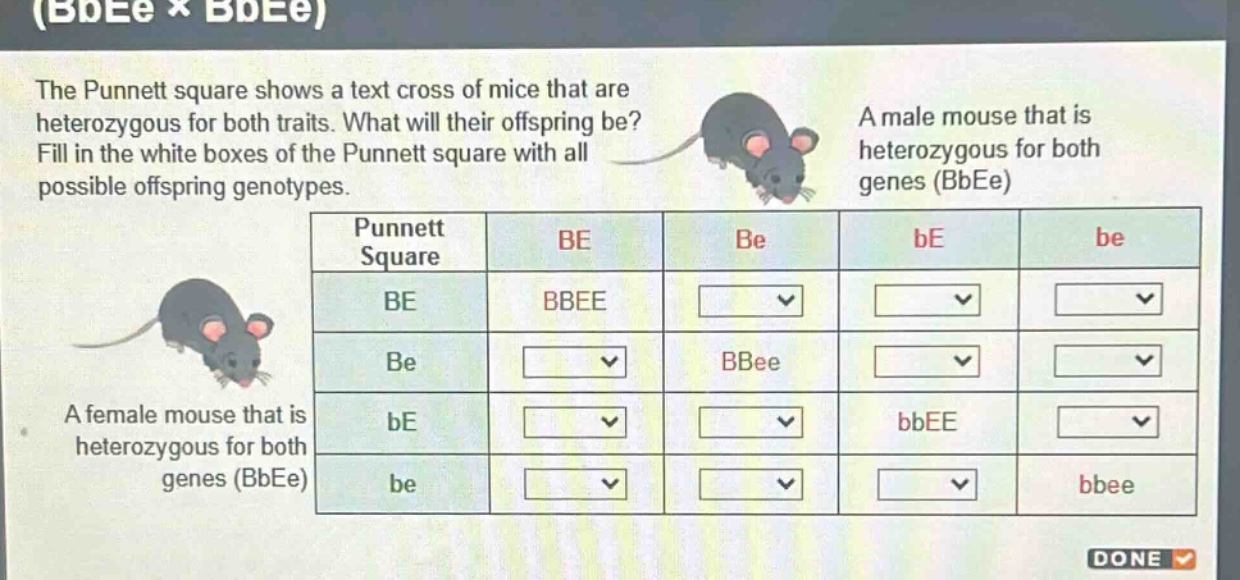
the punnett square shows a text cross of mice that are heterozygous for both traits. what will their offspring be? fill in the white boxes of the punnett square with all possible offspring genotypes. a male mouse that is heterozygous for both genes (bbee) a female mouse that is heterozygous for both genes (bbee) punnett square be be be be be bbee be bbee be bbee be bbee
Answer
Explanation:
Step1: Determine allele - combination rules
When two heterozygous individuals (BbEe) are crossed, we use the principle of independent assortment. Each parent can produce four types of gametes: BE, Be, bE, be. When filling the Punnett - square, we combine the gametes from the male and female parents.
Step2: Fill the first row (after BBEE)
When the male gamete is BE and the female gametes are Be, bE, be respectively, the genotypes are BBEe, BbEE, BbEe.
Step3: Fill the second row
When the male gamete is Be and the female gametes are BE, bE, be respectively, the genotypes are BBEe, BbEe, Bbee.
Step4: Fill the third row
When the male gamete is bE and the female gametes are BE, Be, be respectively, the genotypes are BbEE, BbEe, bbEe.
Step5: Fill the fourth row
When the male gamete is be and the female gametes are BE, Be, bE respectively, the genotypes are BbEe, Bbee, bbEe.
Answer:
| Punnett Square | BE | Be | bE | be |
|---|---|---|---|---|
| BE | BBEE | BBEe | BbEE | BbEe |
| Be | BBEe | BBee | BbEe | Bbee |
| bE | BbEE | BbEe | bbEE | bbEe |
| be | BbEe | Bbee | bbEe | bbee |