question 2 of 10\n\nsome hares have the same coat color all year long. others have white coats in the winter…
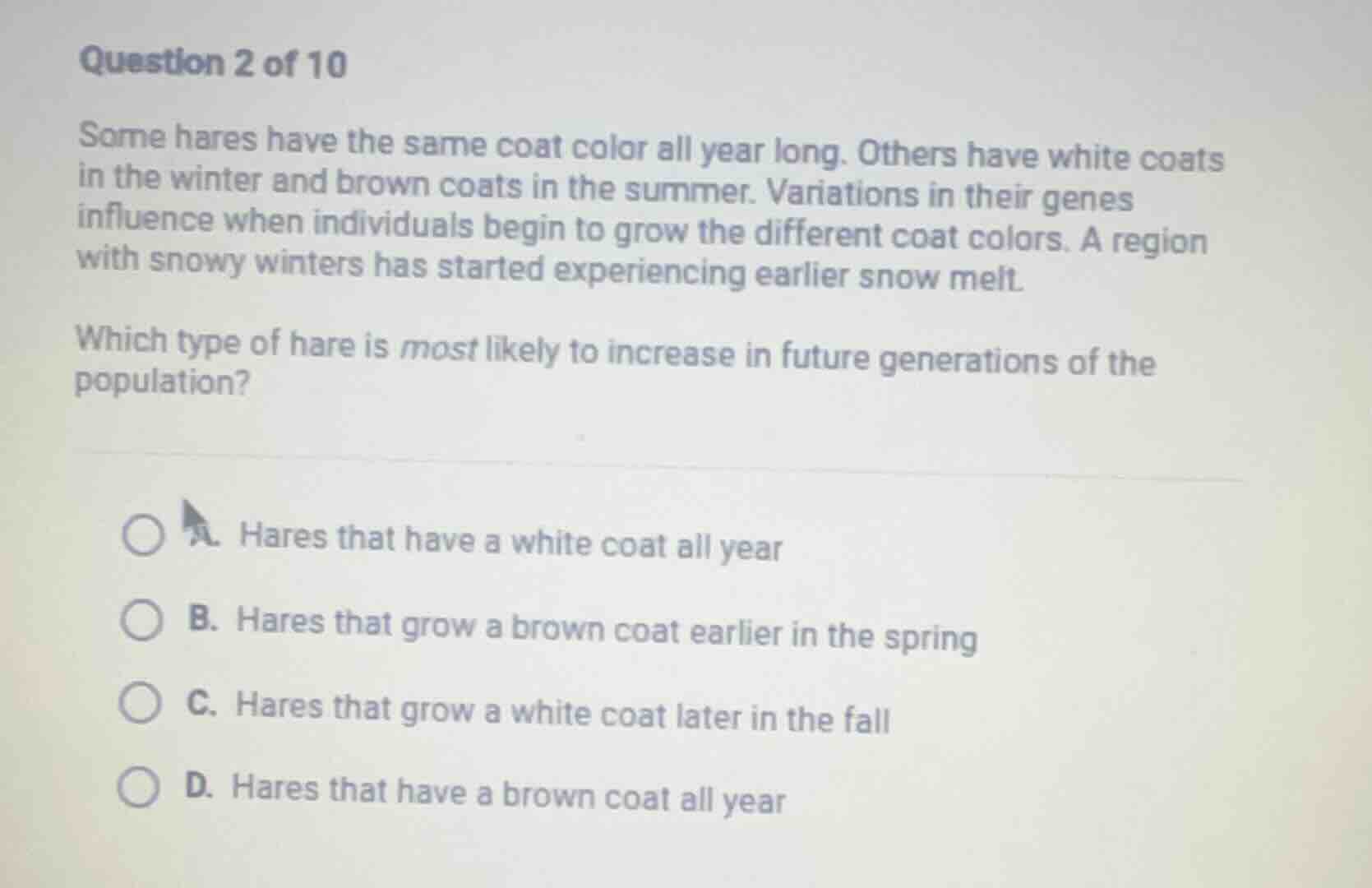
question 2 of 10\n\nsome hares have the same coat color all year long. others have white coats in the winter and brown coats in the summer. variations in their genes influence when individuals begin to grow the different coat colors. a region with snowy winters has started experiencing earlier snow melt.\n\nwhich type of hare is most likely to increase in future generations of the population?\n\na. hares that have a white coat all year\nb. hares that grow a brown coat earlier in the spring\nc. hares that grow a white coat later in the fall\nd. hares that have a brown coat all year
Answer
Brief Explanations:
Natural selection favors individuals with traits that provide a survival advantage in their specific environment. In this scenario, the region is experiencing earlier snow melt, meaning the ground becomes brown sooner in the spring. Hares that still have white coats against a brown background are easily spotted by predators (camouflage mismatch). Therefore, hares with genetic variations that allow them to grow a brown coat earlier in the spring will have a higher survival rate and are more likely to pass those genes to future generations.
Answer:
B. Hares that grow a brown coat earlier in the spring