read the excerpt from \the environmental ethic.\\nit is fashionable in some quarters to wave aside the small…
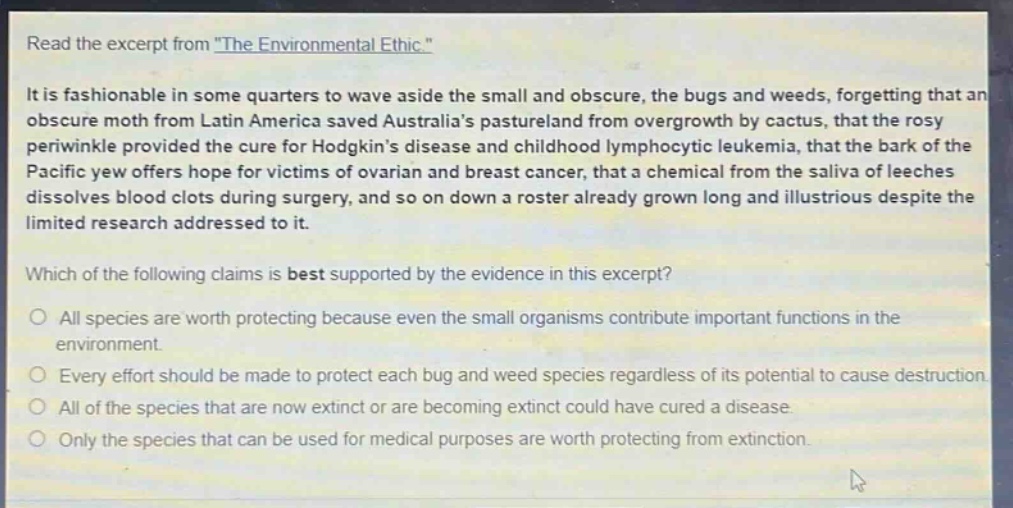
read the excerpt from \the environmental ethic.\\nit is fashionable in some quarters to wave aside the small and obscure, the bugs and weeds, forgetting that an obscure moth from latin america saved australias pastureland from overgrowth by cactus, that the rosy periwinkle provided the cure for hodgkins disease and childhood lymphocytic leukemia, that the bark of the pacific yew offers hope for victims of ovarian and breast cancer, that a chemical from the saliva of leeches dissolves blood clots during surgery, and so on down a roster already grown long and illustrious despite the limited research addressed to it.\nwhich of the following claims is best supported by the evidence in this excerpt?\no all species are worth protecting because even the small organisms contribute important functions in the environment.\no every effort should be made to protect each bug and weed species regardless of its potential to cause destruction.\no all of the species that are now extinct or are becoming extinct could have cured a disease.\no only the species that can be used for medical purposes are worth protecting from extinction.
Answer
Brief Explanations:
The excerpt lists various small and obscure organisms that have provided important medical and environmental - related benefits. It implies that all species are valuable as even small organisms play important roles. Option 1 aligns with this idea. Option 2 is extreme as it ignores potential destruction. Option 3 is too absolute about extinct species. Option 4 is too narrow in focusing only on medical - use species.
Answer:
All species are worth protecting because even the small organisms contribute important functions in the environment.