read the passage. then answer the question. a barn swallow preens, or grooms its feathers, by coating them…
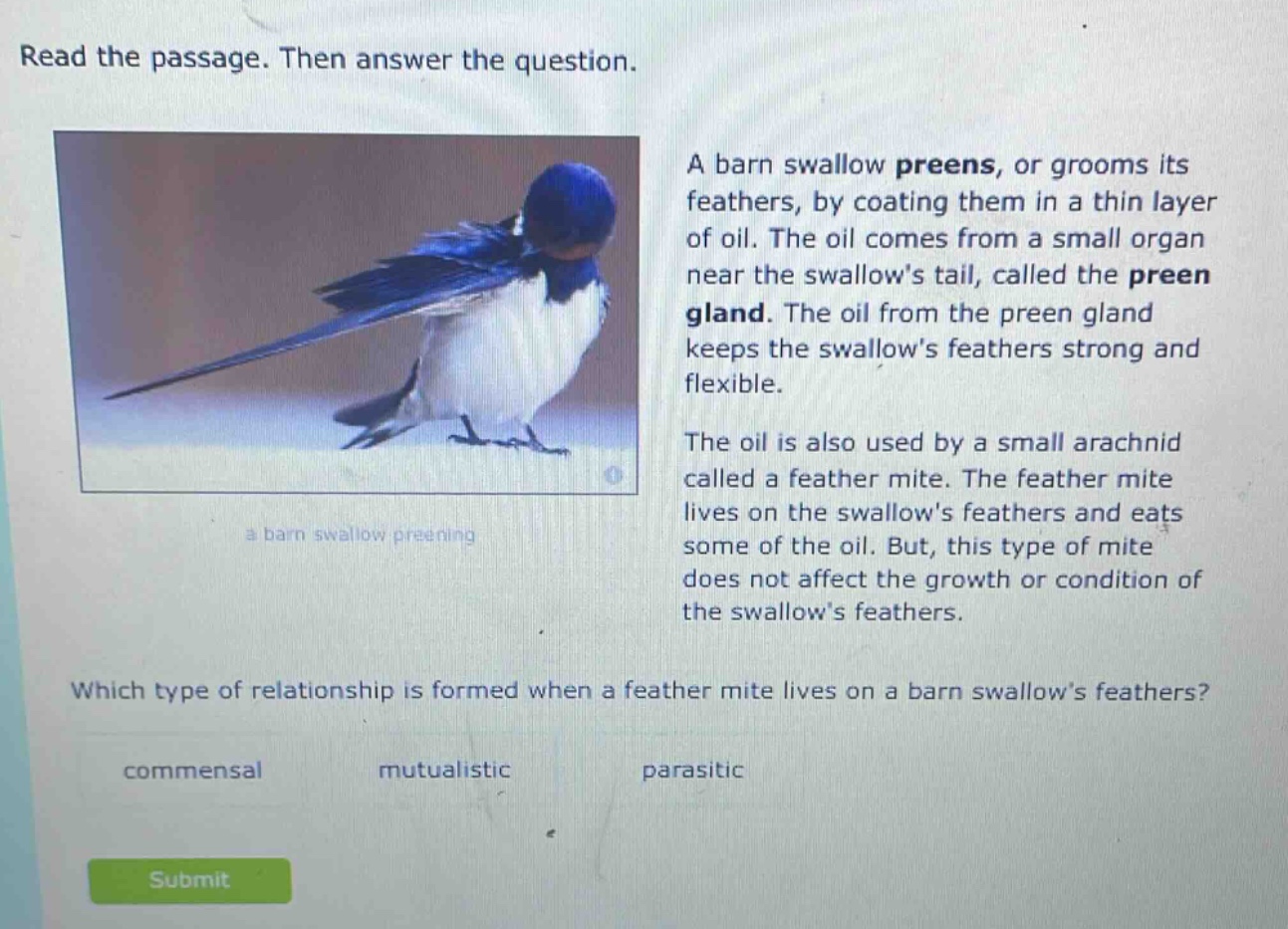
read the passage. then answer the question. a barn swallow preens, or grooms its feathers, by coating them in a thin layer of oil. the oil comes from a small organ near the swallows tail, called the preen gland. the oil from the preen gland keeps the swallows feathers strong and flexible. the oil is also used by a small arachnid called a feather mite. the feather mite lives on the swallows feathers and eats some of the oil. but, this type of mite does not affect the growth or condition of the swallows feathers. which type of relationship is formed when a feather mite lives on a barn swallows feathers? commensal mutualistic parasitic
Answer
Brief Explanations:
In commensalism, one organism benefits while the other is neither helped nor harmed. The feather - mite benefits by eating the oil from the barn swallow's preen gland, and the swallow's feather growth and condition are not affected. So, it's commensalism.
Answer:
commensal