read the passage. then answer the question. epiphytic orchids are flowering plants that can grow in tropical…
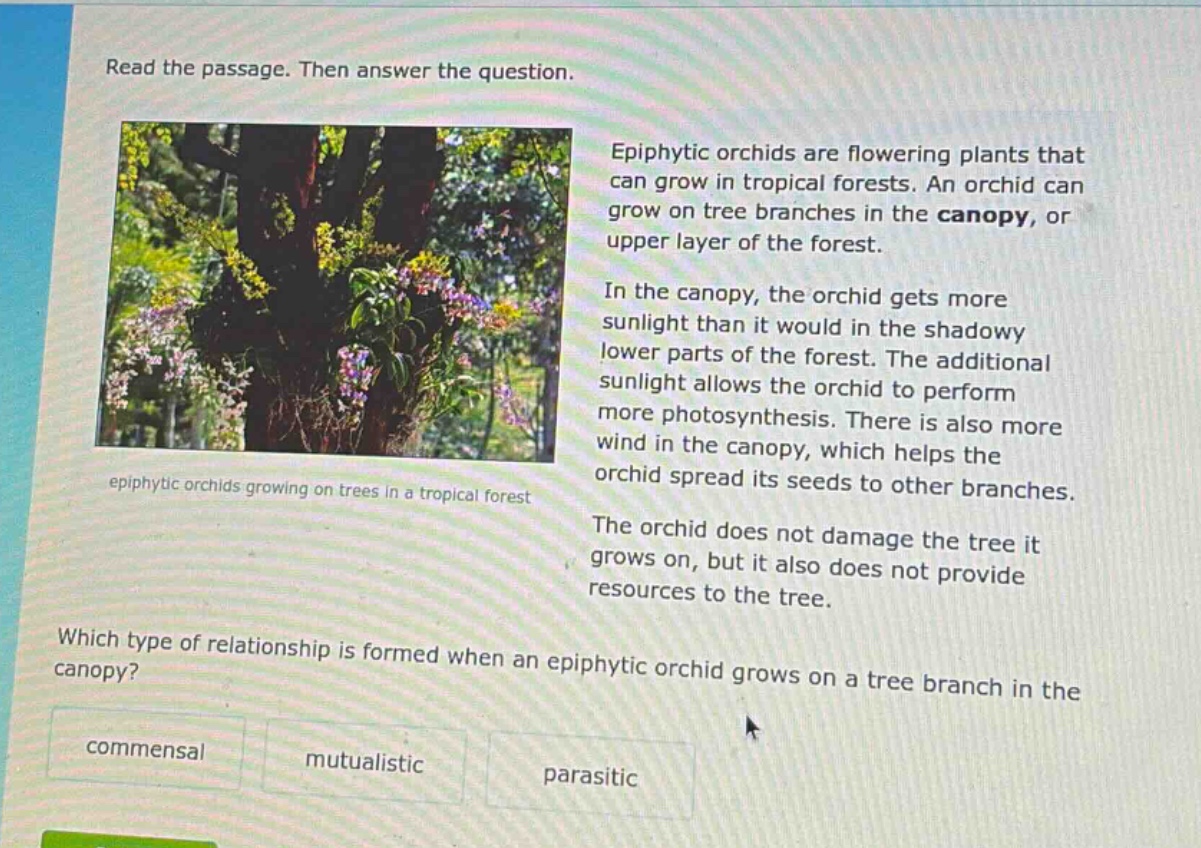
read the passage. then answer the question. epiphytic orchids are flowering plants that can grow in tropical forests. an orchid can grow on tree branches in the canopy, or upper layer of the forest. in the canopy, the orchid gets more sunlight than it would in the shadowy lower parts of the forest. the additional sunlight allows the orchid to perform more photosynthesis. there is also more wind in the canopy, which helps the orchid spread its seeds to other branches. the orchid does not damage the tree it grows on, but it also does not provide resources to the tree. which type of relationship is formed when an epiphytic orchid grows on a tree branch in the canopy? commensal mutualistic parasitic
Answer
Brief Explanations:
In commensalism, one organism benefits while the other is neither helped nor harmed. The epiphytic orchid benefits from more sunlight and wind - dispersal of seeds by growing on the tree, and the tree is unaffected. In mutualism, both organisms benefit. In parasitism, one organism (parasite) benefits at the expense of the other (host).
Answer:
A. commensal