read the passage. then answer the question. guinea worms are a type of roundworm. immature guinea worms live…
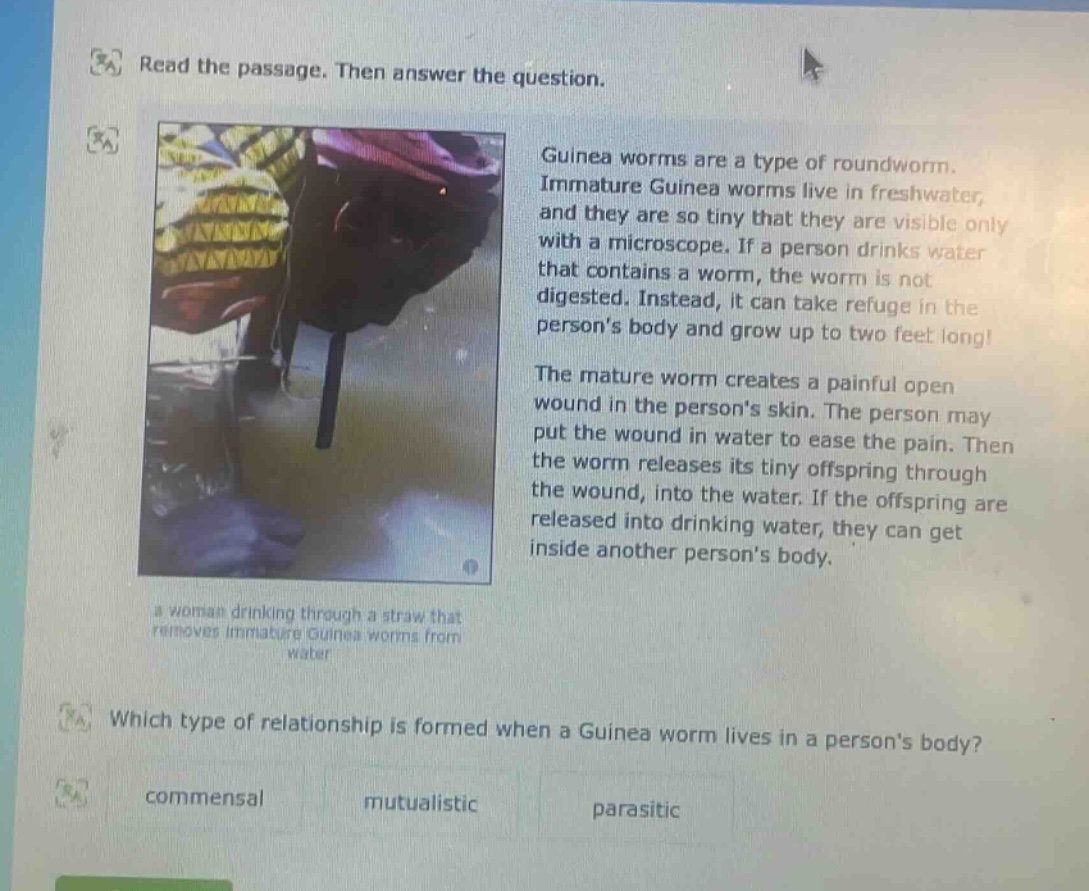
read the passage. then answer the question. guinea worms are a type of roundworm. immature guinea worms live in freshwater, and they are so tiny that they are visible only with a microscope. if a person drinks water that contains a worm, the worm is not digested. instead, it can take refuge in the persons body and grow up to two feet long! the mature worm creates a painful open wound in the persons skin. the person may put the wound in water to ease the pain. then the worm releases its tiny offspring through the wound, into the water. if the offspring are released into drinking water, they can get inside another persons body. a woman drinking through a straw that removes immature guinea worms from water which type of relationship is formed when a guinea worm lives in a persons body? commensal mutualistic parasitic
Answer
Brief Explanations:
In a parasitic relationship, one organism (parasite) benefits at the expense of another (host). Guinea - worms live in a person's body, cause harm like creating painful open wounds, and gain a living environment and resources. This meets the definition of parasitism. Commensalism is when one organism benefits and the other is neither helped nor harmed, and mutualism is when both organisms benefit. Since the guinea - worm harms the human host, it's not commensal or mutualistic.
Answer:
parasitic