read the passage. then answer the question below. the sundarbans forest in india and bangladesh is the…
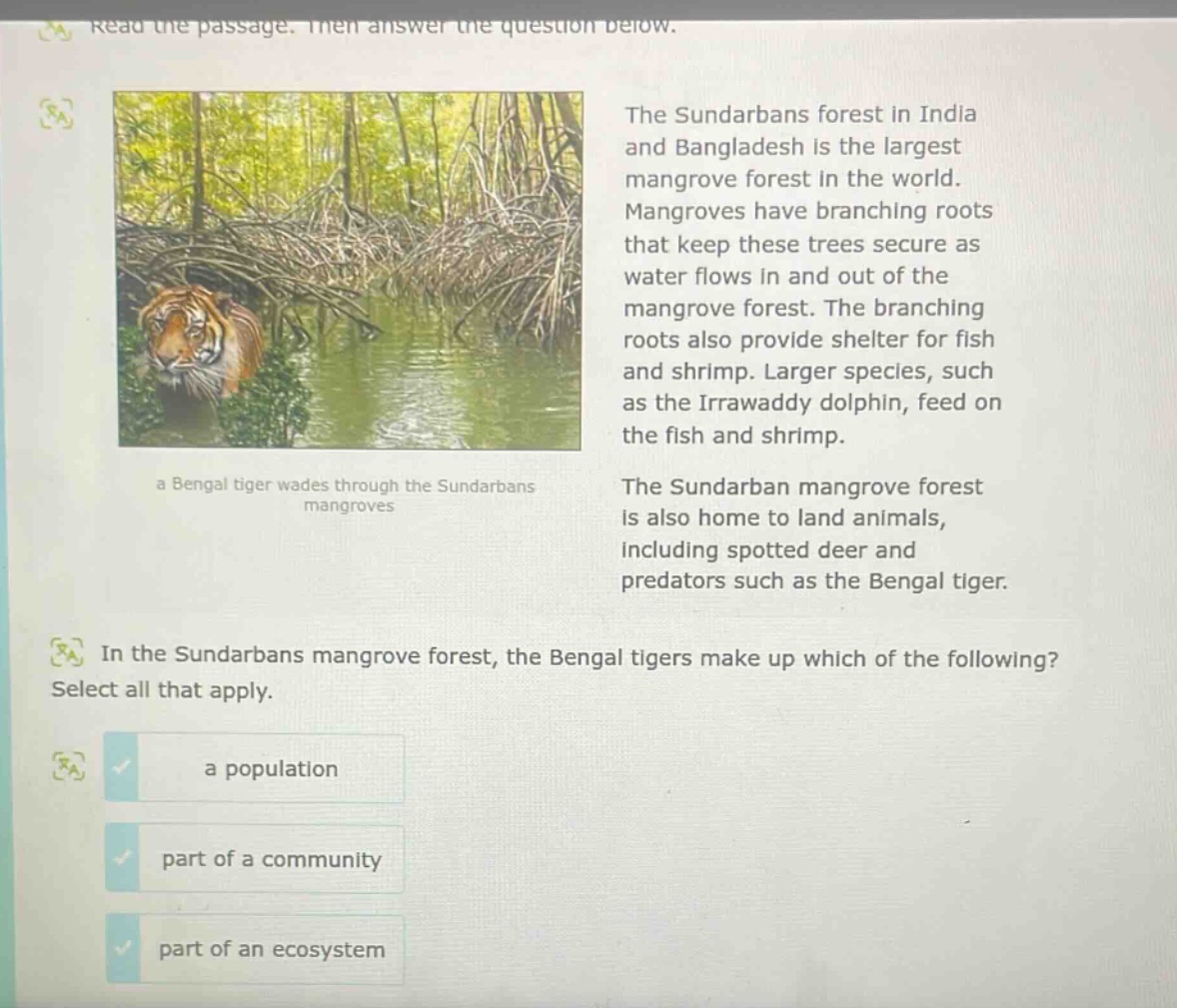
read the passage. then answer the question below. the sundarbans forest in india and bangladesh is the largest mangrove forest in the world. mangroves have branching roots that keep these trees secure as water flows in and out of the mangrove forest. the branching roots also provide shelter for fish and shrimp. larger species, such as the irrawaddy dolphin, feed on the fish and shrimp. the sundarban mangrove forest is also home to land animals, including spotted deer and predators such as the bengal tiger. in the sundarbans mangrove forest, the bengal tigers make up which of the following? select all that apply. a population part of a community part of an ecosystem
Answer
Brief Explanations:
A population is a group of the same species in an area. A community is all the different species in an area. An ecosystem includes all living and non - living components in an area. Bengal tigers in the Sundarbans are a group of the same species (population), interact with other species (part of community), and are in an environment with living and non - living elements (part of ecosystem).
Answer:
a population, part of a community, part of an ecosystem