read the scenario and review the social media post. ana comes across this post by a biologist named…
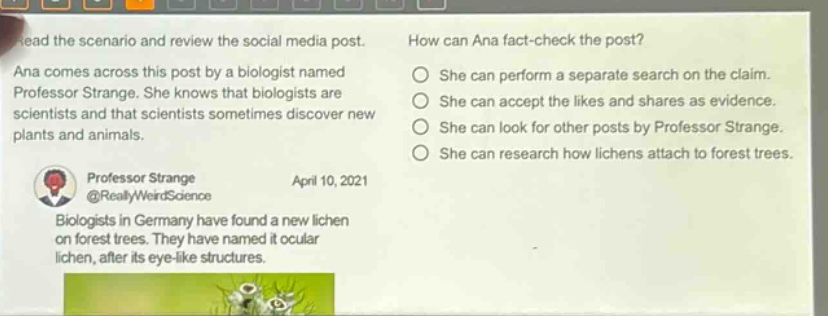
read the scenario and review the social media post. ana comes across this post by a biologist named professor strange. she knows that biologists are scientists and that scientists sometimes discover new plants and animals. professor strange @reallyweirdscience april 10, 2021 biologists in germany have found a new lichen on forest trees. they have named it ocular lichen, after its eye - like structures. how can ana fact - check the post? she can perform a separate search on the claim. she can accept the likes and shares as evidence. she can look for other posts by professor strange. she can research how lichens attach to forest trees.
Answer
Brief Explanations:
To fact - check a claim, performing a separate search on the claim is a reliable method. Likes and shares are not evidence, looking for other posts by the same person doesn't verify the claim, and researching a related but different topic (how lichens attach to trees) won't fact - check the new lichen discovery claim.
Answer:
She can perform a separate search on the claim.