scientific investigations often lead to the formulation of new scientific questions. charles darwin reviewed…
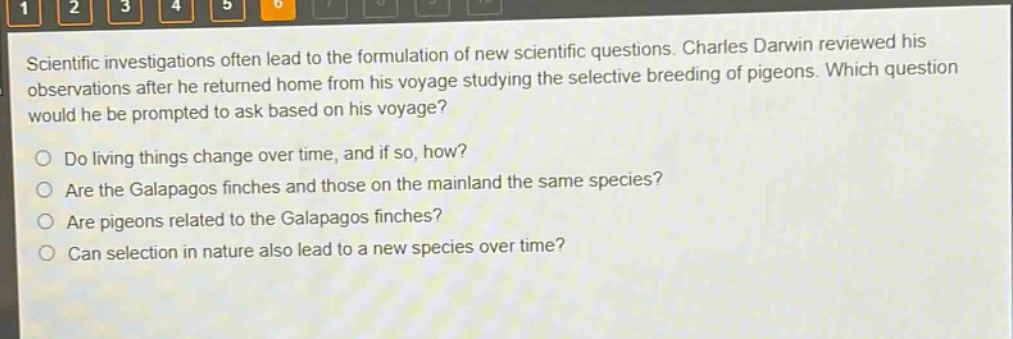
scientific investigations often lead to the formulation of new scientific questions. charles darwin reviewed his observations after he returned home from his voyage studying the selective breeding of pigeons. which question would he be prompted to ask based on his voyage?\ndo living things change over time, and if so, how?\nare the galapagos finches and those on the mainland the same species?\nare pigeons related to the galapagos finches?\ncan selection in nature also lead to a new species over time?
Answer
Brief Explanations:
Darwin's work focused on evolution and natural selection. His study of selective - breeding of pigeons made him think about natural selection in nature. The question about whether selection in nature can lead to new species over time is most in line with his research focus. The other questions are either too specific to a particular species comparison or not as central to his overall theory - building process.
Answer:
Can selection in nature also lead to a new species over time?