a scientist discovers a cell that has chloroplasts, cytoplasm, dna, and a cell membrane. which statement…
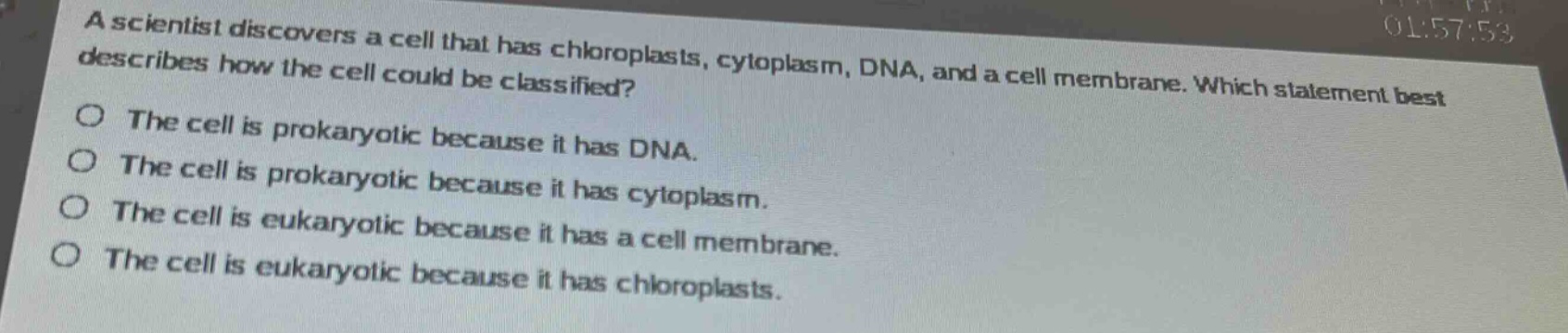
a scientist discovers a cell that has chloroplasts, cytoplasm, dna, and a cell membrane. which statement best describes how the cell could be classified? the cell is prokaryotic because it has dna. the cell is prokaryotic because it has cytoplasm. the cell is eukaryotic because it has a cell membrane. the cell is eukaryotic because it has chloroplasts.
Answer
Answer:
The cell is eukaryotic because it has chloroplasts.
Brief Explanations:
Chloroplasts are organelles found only in eukaryotic plant - like cells. Prokaryotic cells lack membrane - bound organelles such as chloroplasts. Having DNA, cytoplasm, or a cell membrane is not exclusive to either prokaryotes or eukaryotes, but chloroplasts are a characteristic of eukaryotes.