a scientist is examining the function of macromolecules in a cell. she notices that movement of large…
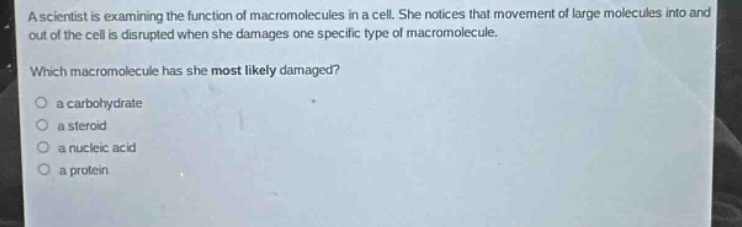
a scientist is examining the function of macromolecules in a cell. she notices that movement of large molecules into and out of the cell is disrupted when she damages one specific type of macromolecule. which macromolecule has she most likely damaged? a carbohydrate a steroid a nucleic acid a protein
Answer
Brief Explanations:
Proteins play crucial roles in transport across cell - membranes. They can form channels and carriers that facilitate the movement of large molecules into and out of the cell. Damage to these transport - related proteins can disrupt this movement. Carbohydrates are mainly for cell - recognition and energy storage, steroids are lipids with various regulatory functions, and nucleic acids store and transmit genetic information.
Answer:
a protein