a scientist studies a population of lizards isolated on a tropical island over many years. during the study…
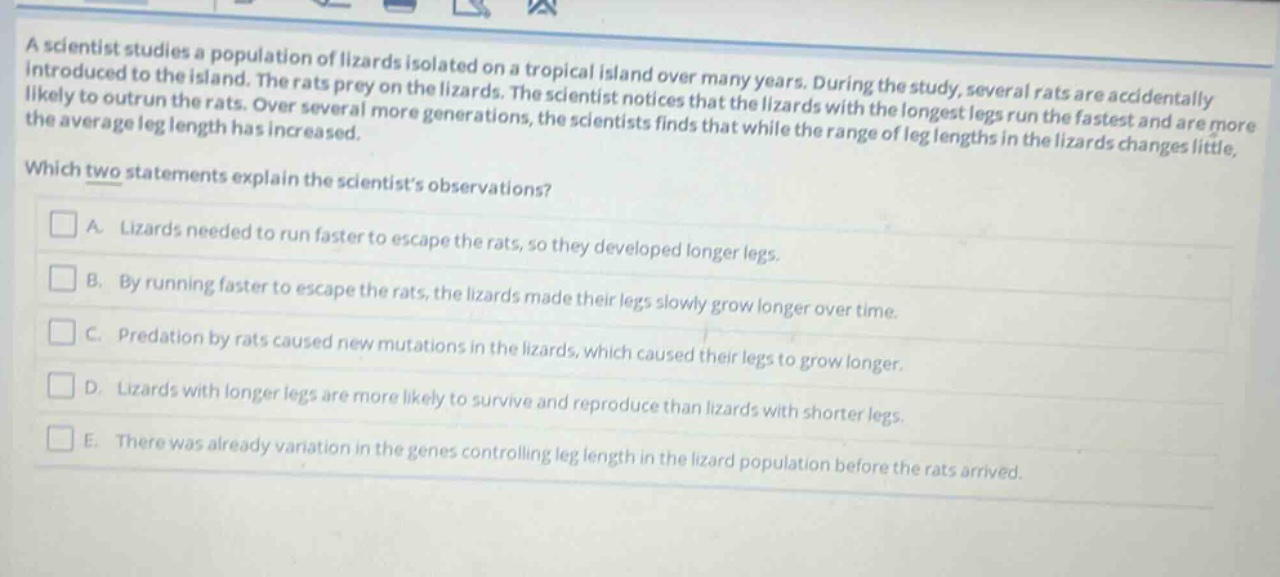
a scientist studies a population of lizards isolated on a tropical island over many years. during the study, several rats are accidentally introduced to the island. the rats prey on the lizards. the scientist notices that the lizards with the longest legs run the fastest and are more likely to outrun the rats. over several more generations, the scientists finds that while the range of leg lengths in the lizards changes little, the average leg length has increased. which two statements explain the scientists observations? a. lizards needed to run faster to escape the rats, so they developed longer legs. b. by running faster to escape the rats, the lizards made their legs slowly grow longer over time. c. predation by rats caused new mutations in the lizards, which caused their legs to grow longer. d. lizards with longer legs are more likely to survive and reproduce than lizards with shorter legs. e. there was already variation in the genes controlling leg length in the lizard population before the rats arrived.
Answer
Brief Explanations:
- Statement D: In the context of natural selection, lizards with longer - legged traits have a survival and reproductive advantage over those with shorter legs when rats are predators. This is because longer - legged lizards can run faster and escape predation more effectively, leading to an increase in the frequency of the long - leg trait in the population over generations.
- Statement E: For natural selection to act on a trait (leg length in this case), there must be pre - existing genetic variation in the population. If all lizards had identical genes for leg length, there would be no variation for natural selection to act upon, and the average leg length could not change over time.
Answer:
D. Lizards with longer legs are more likely to survive and reproduce than lizards with shorter legs. E. There was already variation in the genes controlling leg length in the lizard population before the rats arrived.