a scientist is studying two types of worms. worm x has dna identical to its parent. worm y has a combination…
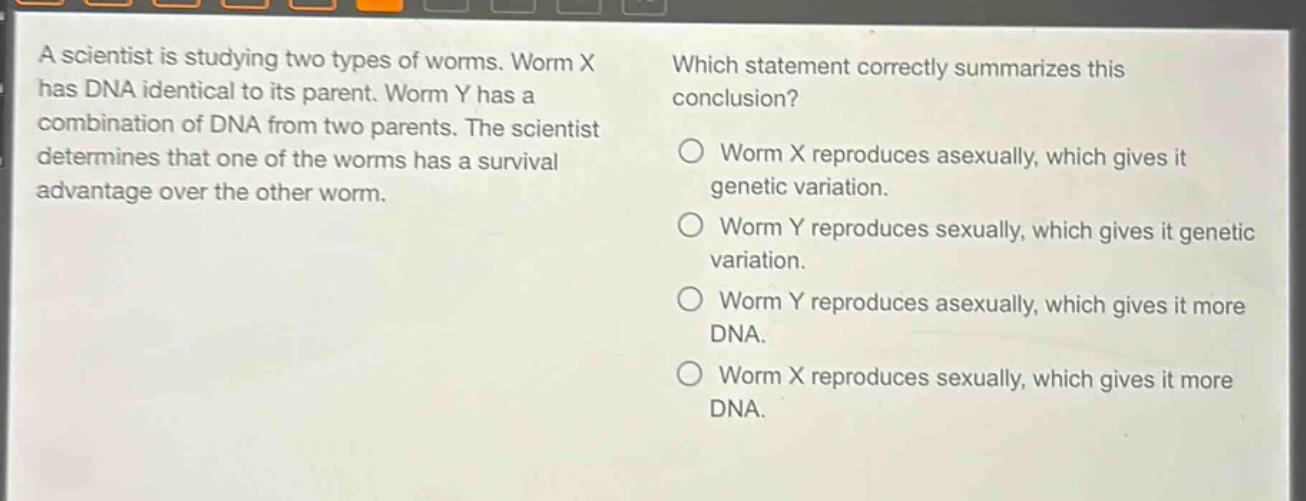
a scientist is studying two types of worms. worm x has dna identical to its parent. worm y has a combination of dna from two parents. the scientist determines that one of the worms has a survival advantage over the other worm. which statement correctly summarizes this conclusion? worm x reproduces asexually, which gives it genetic variation. worm y reproduces sexually, which gives it genetic variation. worm y reproduces asexually, which gives it more dna. worm x reproduces sexually, which gives it more dna.
Answer
Brief Explanations:
Asexual reproduction results in offspring with DNA identical to the parent, while sexual reproduction combines DNA from two parents, leading to genetic variation. Worm X has DNA identical to its parent, indicating asexual reproduction with no genetic variation. Worm Y has DNA from two parents, meaning it reproduces sexually and has genetic variation.
Answer:
Worm Y reproduces sexually, which gives it genetic variation.