a scientist has been tracking and studying a population of deer in yellowstone national park. he surveys the…
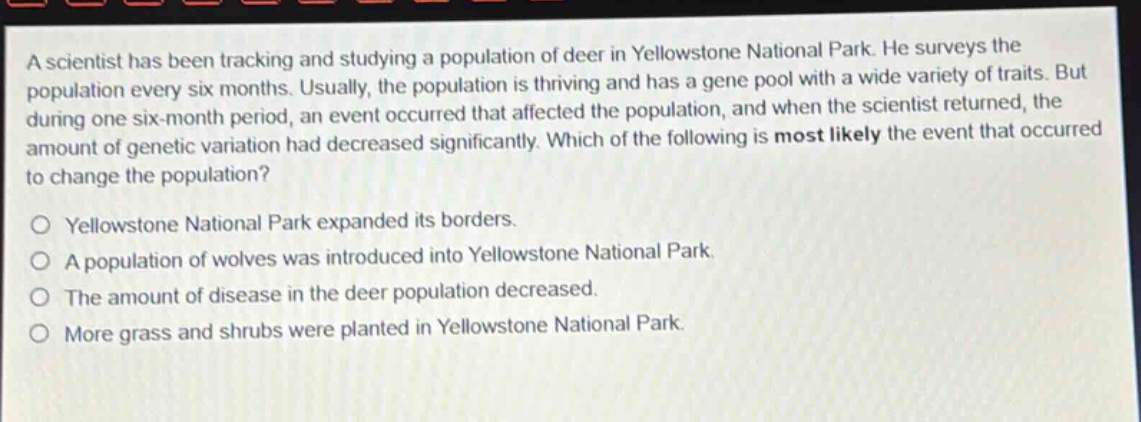
a scientist has been tracking and studying a population of deer in yellowstone national park. he surveys the population every six months. usually, the population is thriving and has a gene pool with a wide variety of traits. but during one six - month period, an event occurred that affected the population, and when the scientist returned, the amount of genetic variation had decreased significantly. which of the following is most likely the event that occurred to change the population?\no yellowstone national park expanded its borders.\no a population of wolves was introduced into yellowstone national park.\no the amount of disease in the deer population decreased.\no more grass and shrubs were planted in yellowstone national park.
Answer
Brief Explanations:
- Analyze each option:
- Expanding park - borders would likely increase genetic variation as it could introduce new deer or allow for more migration.
- Introduction of wolves (predators) can cause a bottleneck effect. If wolves prey on deer non - randomly (e.g., weaker or less well - adapted deer), it can reduce genetic variation in the deer population.
- Decrease in disease would likely allow more deer to survive and reproduce, potentially increasing genetic variation.
- Planting more grass and shrubs would provide more resources, which could support a larger and more diverse deer population, increasing genetic variation.
Answer:
B. A population of wolves was introduced into Yellowstone National Park.