a scientist is trying to determine the relationship between clams, snails, and squid. when she generates a…
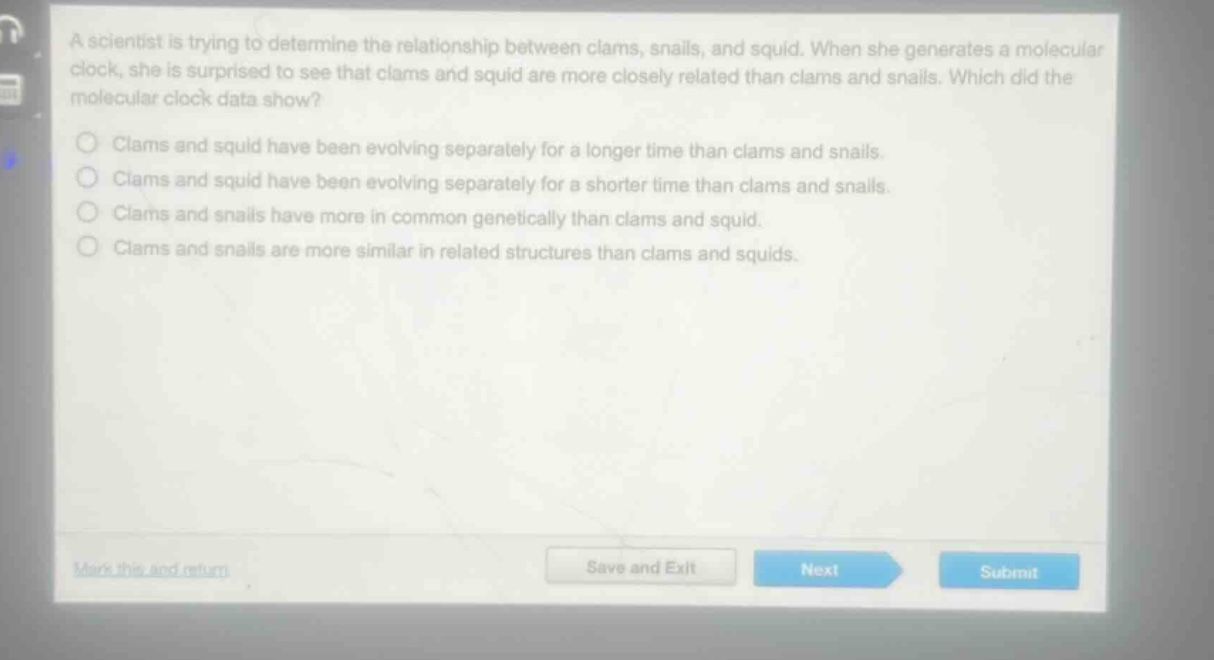
a scientist is trying to determine the relationship between clams, snails, and squid. when she generates a molecular clock, she is surprised to see that clams and squid are more closely related than clams and snails. which did the molecular clock data show?\nclams and squid have been evolving separately for a longer time than clams and snails.\nclams and squid have been evolving separately for a shorter time than clams and snails.\nclams and snails have more in common genetically than clams and squid.\nclams and snails are more similar in related structures than clams and squids.
Answer
Answer:
Clams and squid have been evolving separately for a shorter time than clams and snails.
Brief Explanations:
The molecular clock concept suggests that the more closely related two species are, the shorter the time they have been evolving separately. Since clams and squid are more closely related (as per the molecular clock data), they have evolved separately for a shorter time compared to clams and snails. Options about genetic commonality (opposite of data) and structural similarity (not molecular - clock - based) are incorrect.