a scientist wrote a paper titled \directional selection in action\ after observing a population of mice for…
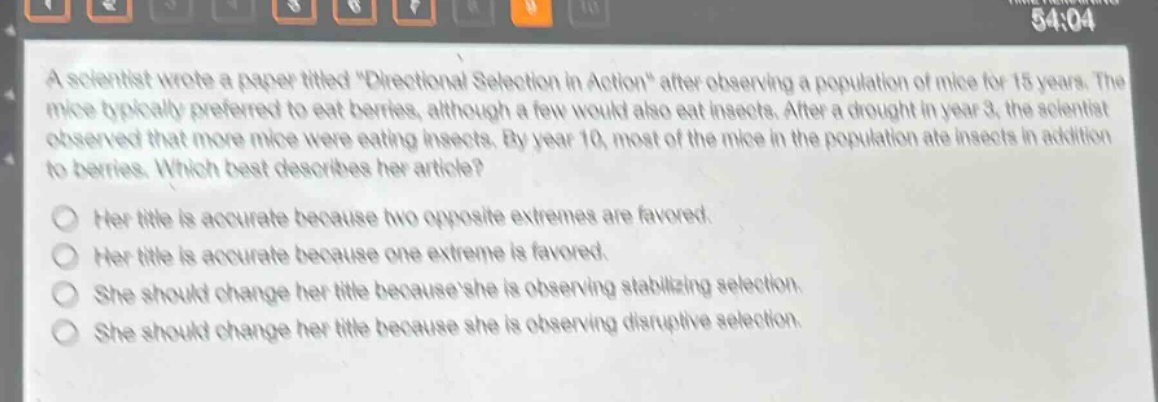
a scientist wrote a paper titled \directional selection in action\ after observing a population of mice for 15 years. the mice typically preferred to eat berries, although a few would also eat insects. after a drought in year 3, the scientist observed that more mice were eating insects. by year 10, most of the mice in the population ate insects in addition to berries. which best describes her article?\nher title is accurate because two opposite extremes are favored.\nher title is accurate because one extreme is favored.\nshe should change her title because she is observing stabilizing selection.\nshe should change her title because she is observing disruptive selection.
Answer
Brief Explanations:
Directional selection favors one extreme of a trait. In this case, the mice's diet shifted from mainly berries to mainly including insects, favoring the 'insect - eating' extreme due to environmental change (drought). It's not stabilizing selection (which favors the average) or disruptive selection (which favors both extremes).
Answer:
Her title is accurate because one extreme is favored.