select all the correct answers. a population of mussels was observed in a particular ecosystem. crabs have…
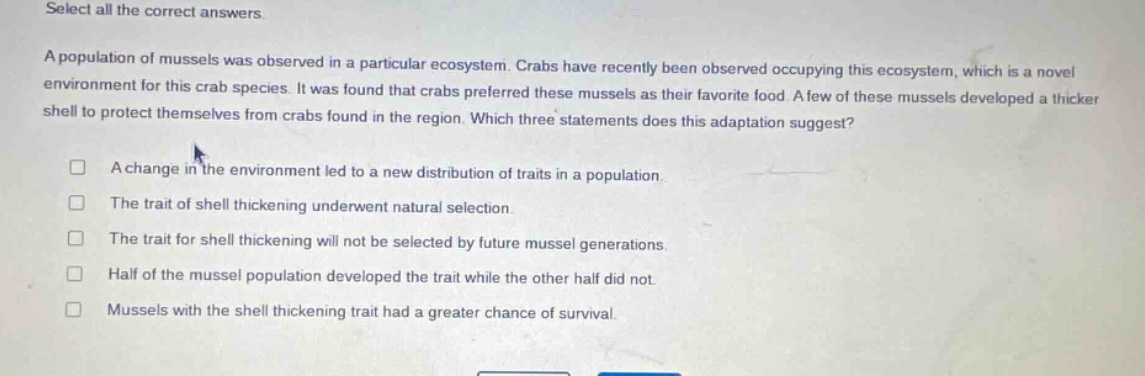
select all the correct answers. a population of mussels was observed in a particular ecosystem. crabs have recently been observed occupying this ecosystem, which is a novel environment for this crab species. it was found that crabs preferred these mussels as their favorite food. a few of these mussels developed a thicker shell to protect themselves from crabs found in the region. which three statements does this adaptation suggest? a change in the environment led to a new distribution of traits in a population. the trait of shell thickening underwent natural selection. the trait for shell thickening will not be selected by future mussel generations. half of the mussel population developed the trait while the other half did not. mussels with the shell thickening trait had a greater chance of survival.
Answer
Brief Explanations:
- The arrival of crabs (environmental change) led some mussels to develop a thicker - shell trait, changing trait distribution.
- Mussels with thicker shells were more likely to survive predation by crabs, which is natural selection at work.
- Traits that enhance survival are likely to be selected for in future generations, so the shell - thickening trait would be favored. It's not specified that exactly half of the population developed the trait.
Answer:
A. A change in the environment led to a new distribution of traits in a population. B. The trait of shell thickening underwent natural selection. E. Mussels with the shell thickening trait had a greater chance of survival.