since the 1950s, surgeons have successfully performed millions of transplants of organs, such as kidneys…
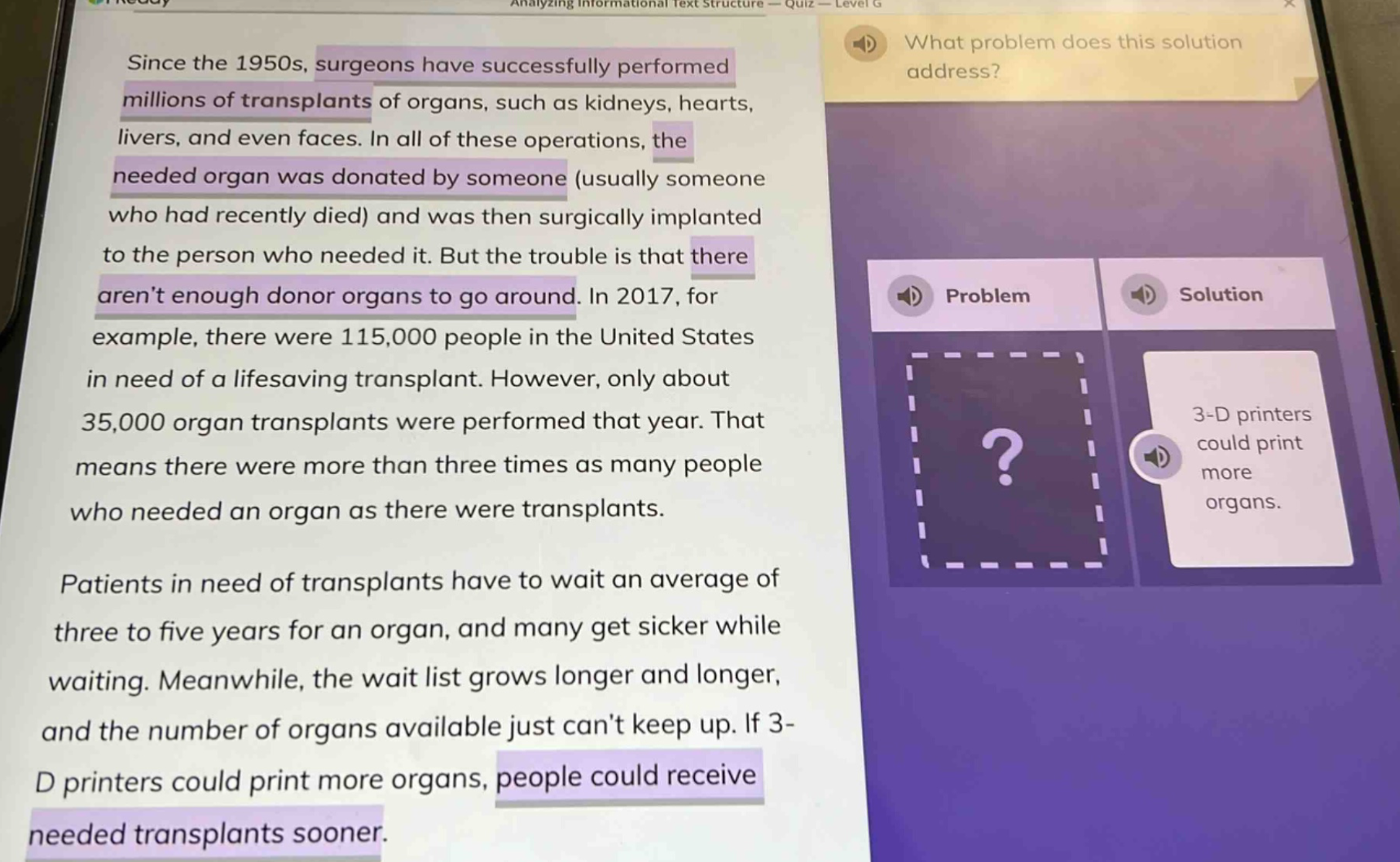
since the 1950s, surgeons have successfully performed millions of transplants of organs, such as kidneys, hearts, livers, and even faces. in all of these operations, the needed organ was donated by someone (usually someone who had recently died) and was then surgically implanted to the person who needed it. but the trouble is that there arent enough donor organs to go around. in 2017, for example, there were 115,000 people in the united states in need of a lifesaving transplant. however, only about 35,000 organ transplants were performed that year. that means there were more than three times as many people who needed an organ as there were transplants. patients in need of transplants have to wait an average of three to five years for an organ, and many get sicker while waiting. meanwhile, the wait list grows longer and longer, and the number of organs available just cant keep up. if 3 - d printers could print more organs, people could receive needed transplants sooner. what problem does this solution address? problem solution 3 - d printers could print more organs.
Answer
Brief Explanations:
The text details the shortage of donor organs for transplants, with a large gap between the number of people needing transplants and the number of actual transplants performed. The proposed solution of 3 - D printers printing more organs aims to address this shortfall.
Answer:
There is a shortage of donor organs for transplants, leaving many patients waiting for long periods.