which statement best describes the process of chemiosmosis and the direct result of its occurrence?\no…
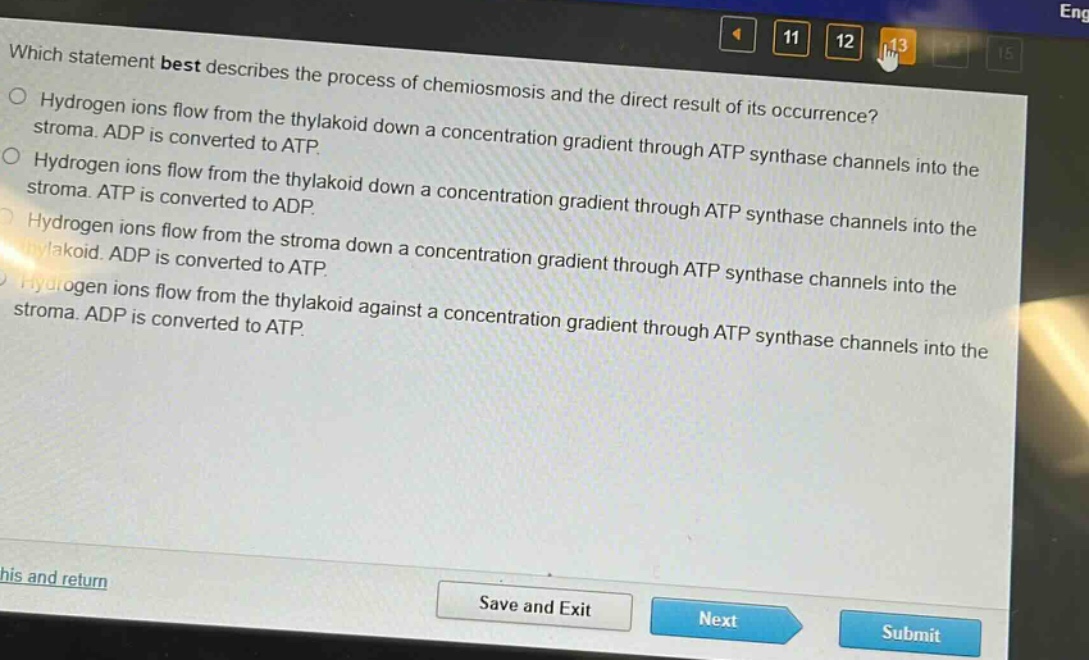
which statement best describes the process of chemiosmosis and the direct result of its occurrence?\no hydrogen ions flow from the thylakoid down a concentration gradient through atp synthase channels into the stroma. adp is converted to atp.\no hydrogen ions flow from the thylakoid down a concentration gradient through atp synthase channels into the stroma. atp is converted to adp.\no hydrogen ions flow from the stroma down a concentration gradient through atp synthase channels into the thylakoid. adp is converted to atp.\no hydrogen ions flow from the thylakoid against a concentration gradient through atp synthase channels into the stroma. adp is converted to atp.
Answer
Brief Explanations:
In chemiosmosis during photosynthesis, hydrogen ions (protons) accumulate in the thylakoid lumen. They flow down their concentration gradient through ATP - synthase channels into the stroma. As they flow, the energy released is used to convert ADP and inorganic phosphate into ATP.
Answer:
Hydrogen ions flow from the thylakoid down a concentration gradient through ATP synthase channels into the stroma. ADP is converted to ATP.