which statements describe the relationship between the area and the biodiversity of an ecosystem? check all…
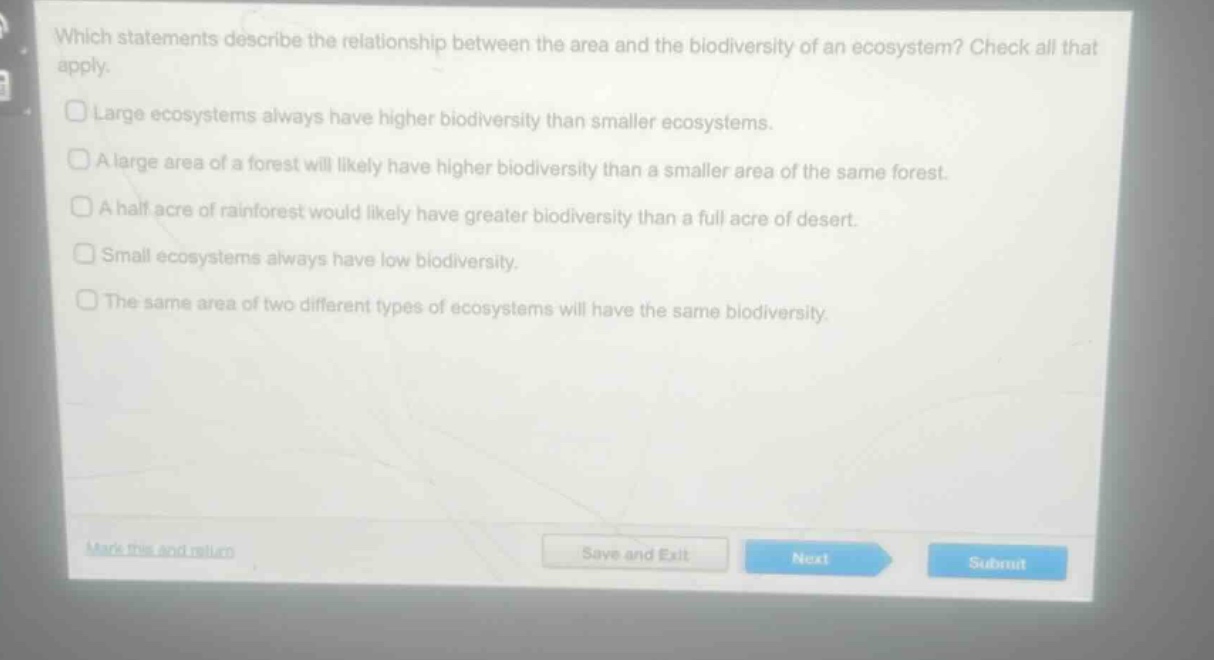
which statements describe the relationship between the area and the biodiversity of an ecosystem? check all that apply. large ecosystems always have higher biodiversity than smaller ecosystems. a large area of a forest will likely have higher biodiversity than a smaller area of the same forest. a half acre of rainforest would likely have greater biodiversity than a full acre of desert. small ecosystems always have low biodiversity. the same area of two different types of ecosystems will have the same biodiversity.
Answer
Answer:
B. A large area of a forest will likely have higher biodiversity than a smaller area of the same forest. C. A half acre of rainforest would likely have greater biodiversity than a full acre of desert.
Brief Explanations:
-
Option B: In the same forest type, a larger area generally offers more habitats, niches, and resources, which can support a greater variety of species, thus higher biodiversity.
-
Option C: Rainforests are known for their extremely high biodiversity due to favorable environmental conditions (e.g., warm temperatures, high rainfall, complex canopy structures). Deserts, on the other hand, have harsh environmental conditions (e.g., limited water, extreme temperatures) that restrict the number of species that can survive. So, even a smaller area of rainforest can have more biodiversity than a larger area of desert.
-
Option A: This is incorrect. For example, a large, uniform agricultural field (a type of ecosystem managed by humans) may have very low biodiversity compared to a small, undisturbed natural ecosystem like a small pond with various aquatic plants, insects, and small fish.
-
Option D: Small ecosystems can have high biodiversity. A small coral reef patch, for instance, can be home to a large number of fish, invertebrate, and algae species due to the complex structure and high productivity of coral reefs.
-
Option E: Different ecosystem types (e.g., a grassland and a tundra of the same area) have different environmental conditions (e.g., temperature, precipitation, soil type). These differences lead to different sets of species being able to survive and thrive, so they will not have the same biodiversity.