therapeutic cloning, the process of creating an embryo from a somatic cell, can be used in embryonic stem…
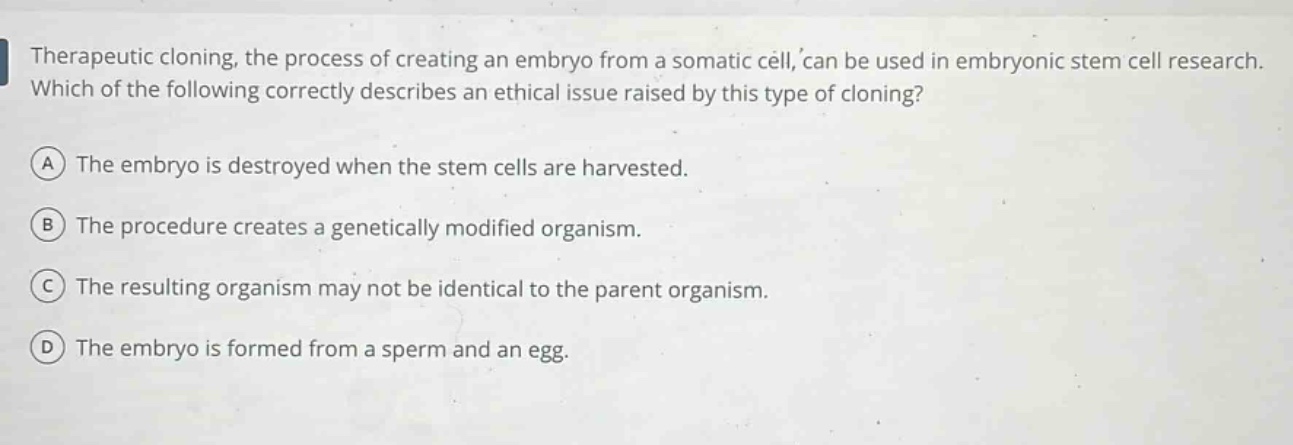
therapeutic cloning, the process of creating an embryo from a somatic cell, can be used in embryonic stem cell research. which of the following correctly describes an ethical issue raised by this type of cloning?\n(a) the embryo is destroyed when the stem cells are harvested.\n(b) the procedure creates a genetically modified organism.\n(c) the resulting organism may not be identical to the parent organism.\n(d) the embryo is formed from a sperm and an egg.
Answer
Brief Explanations:
One major ethical concern in therapeutic cloning is that the embryo is destroyed during the harvesting of stem - cells. This raises questions about the moral status of the embryo. Options B, C, and D are not the main ethical issues related to therapeutic cloning. Option B is about genetic modification which is not the core ethical issue here. Option C is incorrect as the goal is not to create an identical organism in the traditional sense of reproductive cloning. Option D is wrong because in therapeutic cloning, the embryo is created from a somatic cell, not a sperm - egg union.
Answer:
A. The embryo is destroyed when the stem cells are harvested.