unit 3 - week - 3 safety/first aid\nsalon ecology infection control\nsps#2.0 health and\ndirections: read…
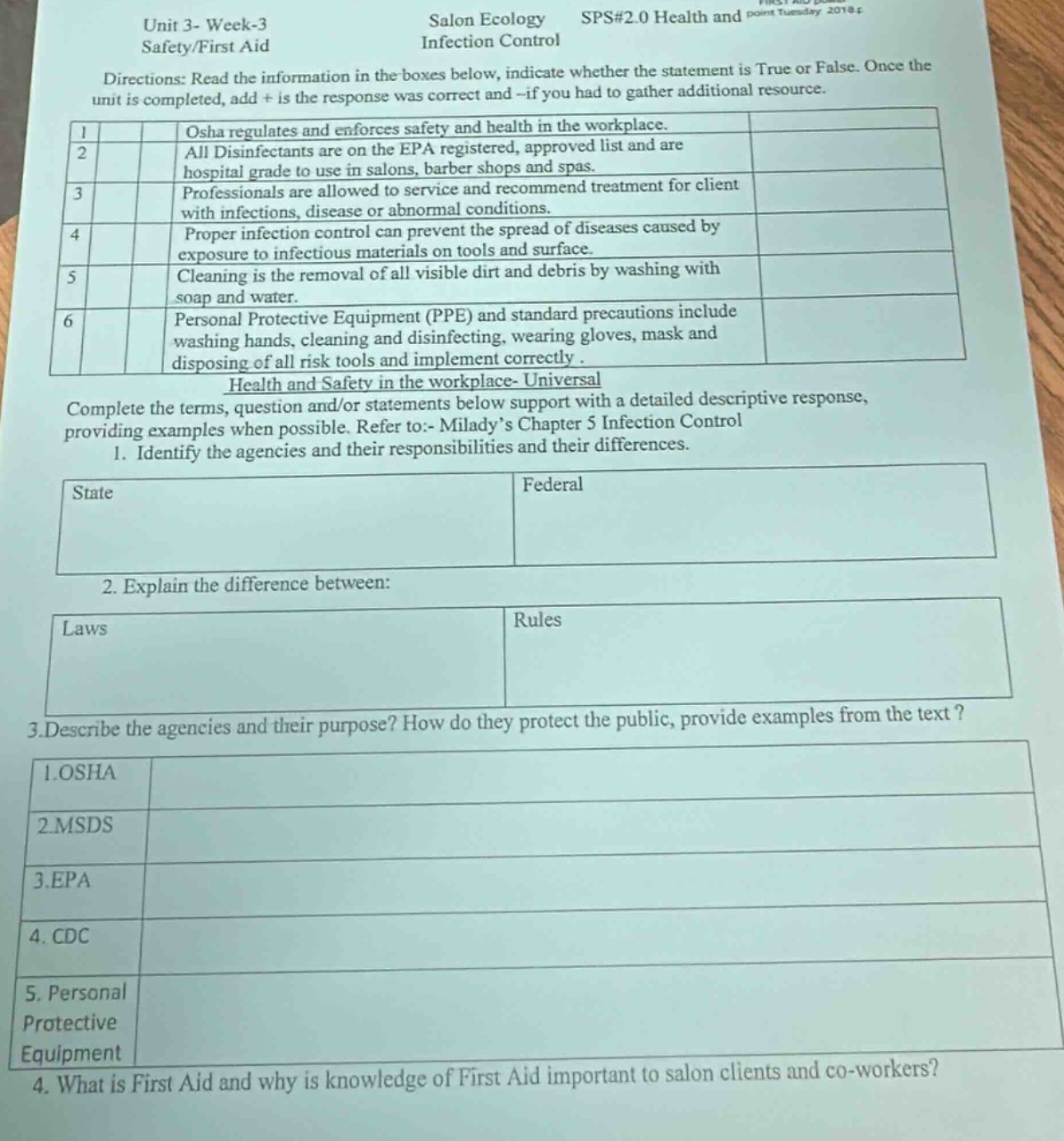
unit 3 - week - 3 safety/first aid\nsalon ecology infection control\nsps#2.0 health and\ndirections: read the information in the boxes below, indicate whether the statement is true or false. once the unit is completed, add + is the response was correct and - if you had to gather additional resource.\n1 osha regulates and enforces safety and health in the workplace.\n2 all disinfectants are on the epa registered, approved list and are hospital grade to use in salons, barber shops and spas.\n3 professionals are allowed to service and recommend treatment for client with infections, disease or abnormal conditions.\n4 proper infection control can prevent the spread of diseases caused by exposure to infectious materials on tools and surface.\n5 cleaning is the removal of all visible dirt and debris by washing with soap and water.\n6 personal protective equipment (ppe) and standard precautions include washing hands, cleaning and disinfecting, wearing gloves, mask and disposing of all risk tools and implement correctly.\nhealth and safety in the workplace - universal\ncomplete the terms, question and/or statements below support with a detailed descriptive response, providing examples when possible. refer to:- milady’s chapter 5 infection control\n1. identify the agencies and their responsibilities and their differences.\nstate federal\n2. explain the difference between:\nlaws rules\n3.describe the agencies and their purpose? how do they protect the public, provide examples from the text?\n1.osha\n2.msds\n3.epa\n4. cdc\n5. personal protective equipment\n4. what is first aid and why is knowledge of first aid important to salon clients and co - workers?
Answer
Brief Explanations:
- True - False Statements:
- Osha (Occupational Safety and Health Administration) indeed regulates and enforces safety and health in the workplace, so statement 1 is True.
- Not all disinfectants are on the EPA - registered, approved list and hospital - grade for use in salons etc., so statement 2 is False.
- Professionals should not service and recommend treatment for clients with infections etc. without proper authorization and in - depth knowledge, so statement 3 is False.
- Proper infection control can prevent disease spread from infectious materials on tools and surfaces, so statement 4 is True.
- Cleaning is the removal of visible dirt and debris by washing with soap and water, so statement 5 is True.
- Personal Protective Equipment (PPE) and standard precautions include the mentioned actions, so statement 6 is True.
- Agencies and Responsibilities:
- State Agencies: May set more local - specific safety and health regulations for salons, barber shops etc. For example, they may regulate the licensing of professionals and the inspection of facilities to ensure compliance with state - level health and safety standards.
- Federal Agencies: OSHA sets and enforces national workplace safety and health standards. The EPA registers disinfectants and sets environmental protection regulations related to chemicals used in salons.
- Laws vs Rules:
- Laws: Are formal, enforceable regulations made by legislative bodies. They have legal consequences if violated. For example, OSHA laws regarding workplace safety are mandatory and non - compliance can lead to fines and legal action.
- Rules: Can be internal or more specific guidelines set by organizations or workplaces. For example, a salon may have its own rules about how often to clean and disinfect tools, which are based on but may be more detailed than the general laws.
- Agencies and Their Purpose:
- OSHA: Ensures safe and healthy working conditions. For example, it requires salons to have proper ventilation and to train employees on safety procedures.
- MSDS (Material Safety Data Sheet): Provides detailed information about chemicals used in the workplace, such as ingredients, hazards, and safety precautions. In a salon, it would detail information about hair dyes, perm solutions etc.
- EPA: Protects the environment and public health. It registers disinfectants to ensure they are effective and safe for use in various settings including salons.
- CDC (Centers for Disease Control and Prevention): Focuses on preventing and controlling the spread of diseases. It provides guidelines on infection control in various settings, including salons, to prevent the spread of infectious diseases.
- Personal Protective Equipment (PPE): Protects workers from potential hazards. In a salon, gloves protect hands from chemicals in hair products, and masks protect from inhaling hair particles or fumes.
- First Aid:
- First Aid is the immediate care given to an injured or ill person. In a salon, knowledge of first aid is important as clients or co - workers may experience minor injuries like cuts from scissors, burns from hot styling tools, or allergic reactions to products. Prompt first aid can prevent the situation from worsening and may even save a life in more serious cases.
Answer:
-
- Statement 1: True
- Statement 2: False
- Statement 3: False
- Statement 4: True
- Statement 5: True
- Statement 6: True
-
- State Agencies: Set local - specific salon safety and health regs, e.g., licensing and facility inspection.
- Federal Agencies: OSHA sets national workplace safety, EPA registers disinfectants.
-
- Laws: Formal, legislative, enforceable with legal consequences, e.g., OSHA laws.
- Rules: Internal or specific org/workplace guidelines, e.g., salon tool - cleaning rules.
-
- OSHA: Ensure safe working conditions, e.g., ventilation and employee training.
- MSDS: Provide chemical info, e.g., about salon products.
- EPA: Protect environment and public health, e.g., register disinfectants.
- CDC: Prevent disease spread, e.g., provide salon infection control guidelines.
- PPE: Protect workers from hazards, e.g., gloves and masks in salon.
- First Aid is immediate care for injured/ill. Important in salon for minor injuries like cuts, burns, allergic reactions to prevent worsening.