a veterinarian knows that the supplement glucosamine is beneficial for dogs joints. he wants to determine if…
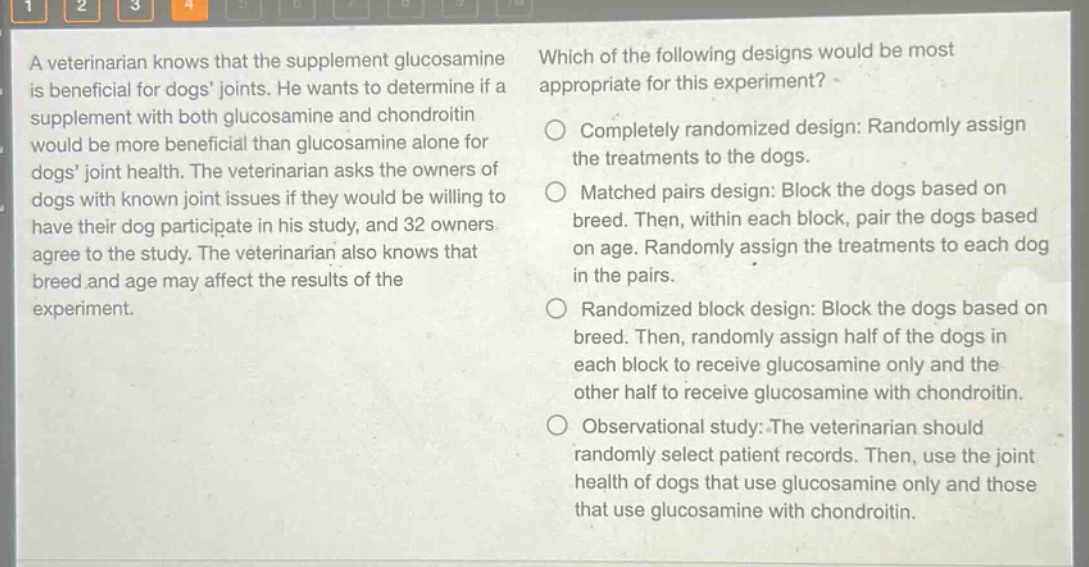
a veterinarian knows that the supplement glucosamine is beneficial for dogs joints. he wants to determine if a supplement with both glucosamine and chondroitin would be more beneficial than glucosamine alone for dogs joint health. the veterinarian asks the owners of dogs with known joint issues if they would be willing to have their dog participate in his study, and 32 owners agree to the study. the veterinarian also knows that breed and age may affect the results of the experiment. which of the following designs would be most appropriate for this experiment? completely randomized design: randomly assign the treatments to the dogs. matched pairs design: block the dogs based on breed. then, within each block, pair the dogs based on age. randomly assign the treatments to each dog in the pairs. randomized block design: block the dogs based on breed. then, randomly assign half of the dogs in each block to receive glucosamine only and the other half to receive glucosamine with chondroitin. observational study: the veterinarian should randomly select patient records. then, use the joint health of dogs that use glucosamine only and those that use glucosamine with chondroitin.
Answer
Brief Explanations:
The veterinarian wants to test the effect of two treatments (glucosamine alone and glucosamine - chondroitin combination) on dogs' joint health, and knows breed and age may affect results. A randomized block design is appropriate as it groups dogs by breed (a factor that can influence the outcome) and then randomly assigns treatments within each block, reducing variability due to breed differences.
Answer:
Randomized block design: Block the dogs based on breed. Then, randomly assign half of the dogs in each block to receive glucosamine only and the other half to receive glucosamine with chondroitin.