without genetic variation, the mechanisms of evolutionary change will not occur. there are several sources…
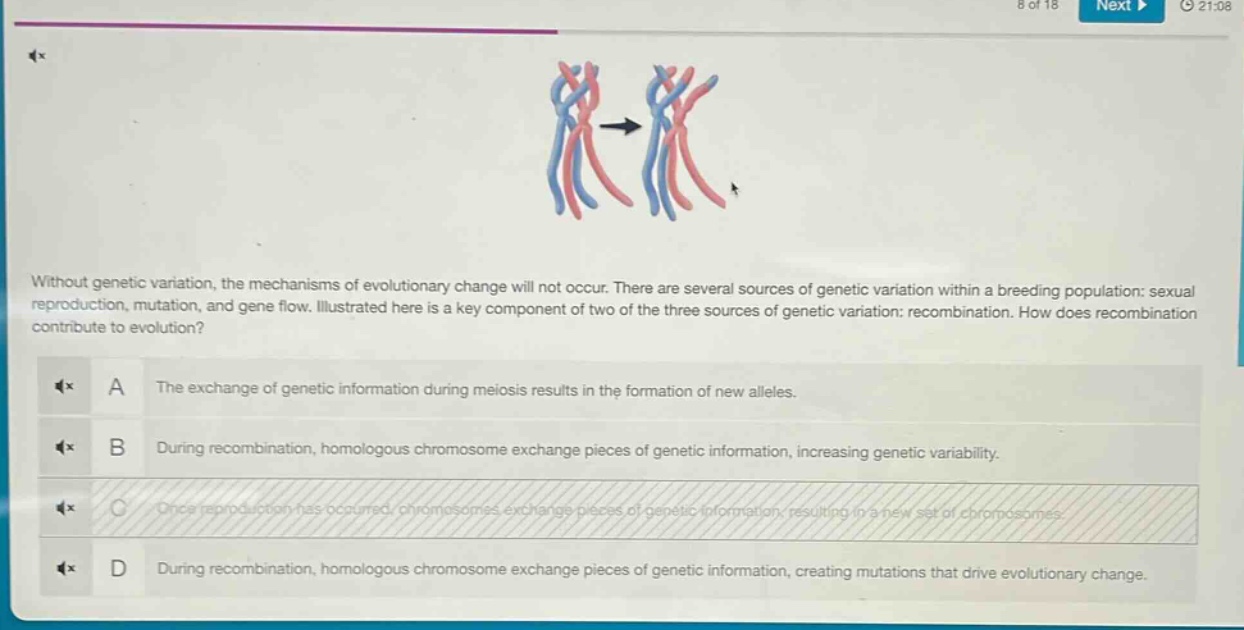
without genetic variation, the mechanisms of evolutionary change will not occur. there are several sources of genetic variation within a breeding population: sexual reproduction, mutation, and gene flow. illustrated here is a key component of two of the three sources of genetic variation: recombination. how does recombination contribute to evolution?\na the exchange of genetic information during meiosis results in the formation of new alleles.\nb during recombination, homologous chromosome exchange pieces of genetic information, increasing genetic variability.\nc once reproduction has occurred, chromosomes exchange pieces of genetic information, resulting in a new set of chromosomes.\nd during recombination, homologous chromosome exchange pieces of genetic information, creating mutations that drive evolutionary change.
Answer
Brief Explanations:
Recombination occurs during meiosis where homologous chromosomes exchange genetic - material. This process increases genetic variability within a population, which is essential for evolution as it provides the raw material on which natural selection can act. New alleles are formed by mutation, not directly by recombination. Recombination does not create mutations. It occurs during meiosis before reproduction in the formation of gametes.
Answer:
B. During recombination, homologous chromosome exchange pieces of genetic information, increasing genetic variability.