directions: examine each of the statements below. decide if the statement is a political, economic, or…
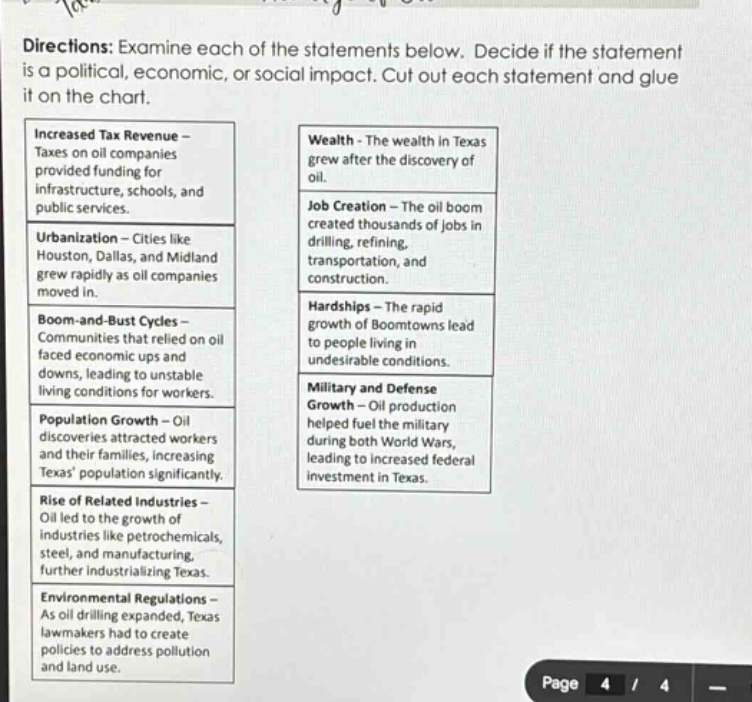
directions: examine each of the statements below. decide if the statement is a political, economic, or social impact. cut out each statement and glue it on the chart. increased tax revenue - taxes on oil companies provided funding for infrastructure, schools, and public services. urbanization - cities like houston, dallas, and midland grew rapidly as oil companies moved in. boom - and - bust cycles - communities that relied on oil faced economic ups and downs, leading to unstable living conditions for workers. population growth - oil discoveries attracted workers and their families, increasing texas population significantly. rise of related industries - oil led to the growth of industries like petrochemicals, steel, and manufacturing, further industrializing texas. environmental regulations - as oil drilling expanded, texas lawmakers had to create policies to address pollution and land use. wealth - the wealth in texas grew after the discovery of oil. job creation - the oil boom created thousands of jobs in drilling, refining, transportation, and construction. hardships - the rapid growth of boomtowns lead to people living in undesirable conditions. military and defense growth - oil production helped fuel the military during both world wars, leading to increased federal investment in texas.
Answer
Brief Explanations:
- Increased Tax Revenue: Economic - Tax revenue is an economic concept related to government income from oil companies for public spending.
- Wealth: Economic - Growth of wealth due to oil discovery is an economic impact.
- Job Creation: Economic - Creation of jobs in various sectors due to oil boom is an economic aspect.
- Urbanization: Social - Rapid growth of cities as oil companies move in affects social structures like housing, community, etc.
- Boom - and - Bust Cycles: Economic - Fluctuations in the economy due to oil dependence are economic impacts.
- Hardships: Social - People living in undesirable conditions in Boomtowns is a social issue.
- Population Growth: Social - Attraction of workers and their families leading to population growth is a social impact.
- Military and Defense Growth: Political - Federal investment in Texas due to oil - fueled military growth involves government and political decisions.
- Rise of Related Industries: Economic - Growth of industries like petrochemicals due to oil is an economic impact.
- Environmental Regulations: Political - Lawmakers creating policies to address pollution and land use are political actions.
Answer:
- Increased Tax Revenue: Economic
- Wealth: Economic
- Job Creation: Economic
- Urbanization: Social
- Boom - and - Bust Cycles: Economic
- Hardships: Social
- Population Growth: Social
- Military and Defense Growth: Political
- Rise of Related Industries: Economic
- Environmental Regulations: Political