entrepreneurs and proprietorships use the information below to answer the question. an entrepreneur is…
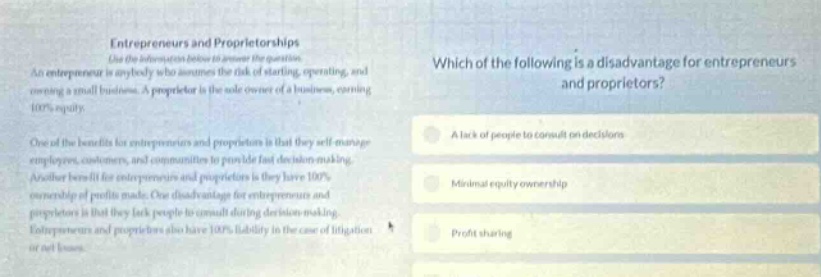
entrepreneurs and proprietorships use the information below to answer the question. an entrepreneur is anybody who assumes the risk of starting, operating, and owning a small business. a proprietor is the sole - owner of a business, owning 100% equity. one of the benefits for entrepreneurs and proprietors is that they self - manage employees, customers, and communities to provide fast decision - making. another benefit for entrepreneurs and proprietors is they have 100% ownership of profits made. one disadvantage for entrepreneurs and proprietors is that they lack people to consult during decision - making. entrepreneurs and proprietors also have 100% liability in the case of litigation or bad loans. which of the following is a disadvantage for entrepreneurs and proprietors? a. a lack of people to consult on decisions. b. minimal equity ownership. c. profit sharing.
Answer
Brief Explanations:
Entrepreneurs and proprietors are sole - owners. They often lack a team to consult on decisions. They have 100% equity ownership and don't have profit - sharing in the sense described here.
Answer:
A. A lack of people to consult on decisions