given the graph below, which of the following statements is true?the graph represents a one-to-one function…
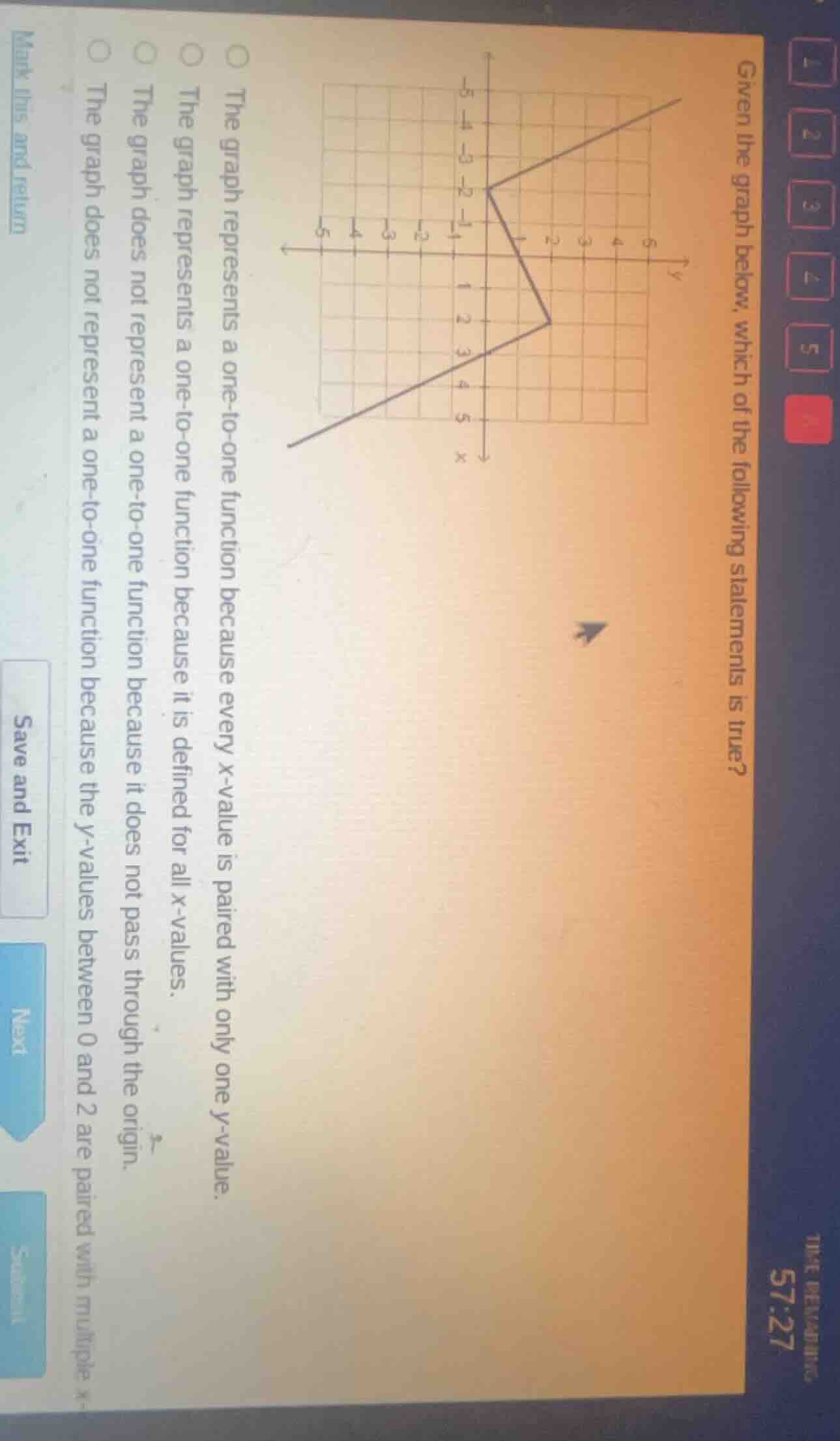
given the graph below, which of the following statements is true?the graph represents a one-to-one function because every x-value is paired with only one y-value.the graph represents a one-to-one function because it is defined for all x-values.the graph does not represent a one-to-one function because it does not pass through the origin.the graph does not represent a one-to-one function because the y-values between 0 and 2 are paired with multiple x-
Answer
Brief Explanations:
A one-to-one function passes the horizontal line test: no horizontal line intersects the graph more than once. For this graph, horizontal lines between (y=0) and (y=2) intersect the graph at multiple (x)-values, so it is not one-to-one. The other options are incorrect: the first option describes a function (not one-to-one), the second is irrelevant, and the third is not the definition of one-to-one.
Answer:
The graph does not represent a one-to-one function because the y-values between 0 and 2 are paired with multiple x-values.