33. what was the main catalyst in causing the conflict between the chinese & the british?\na. tariffs\nb…
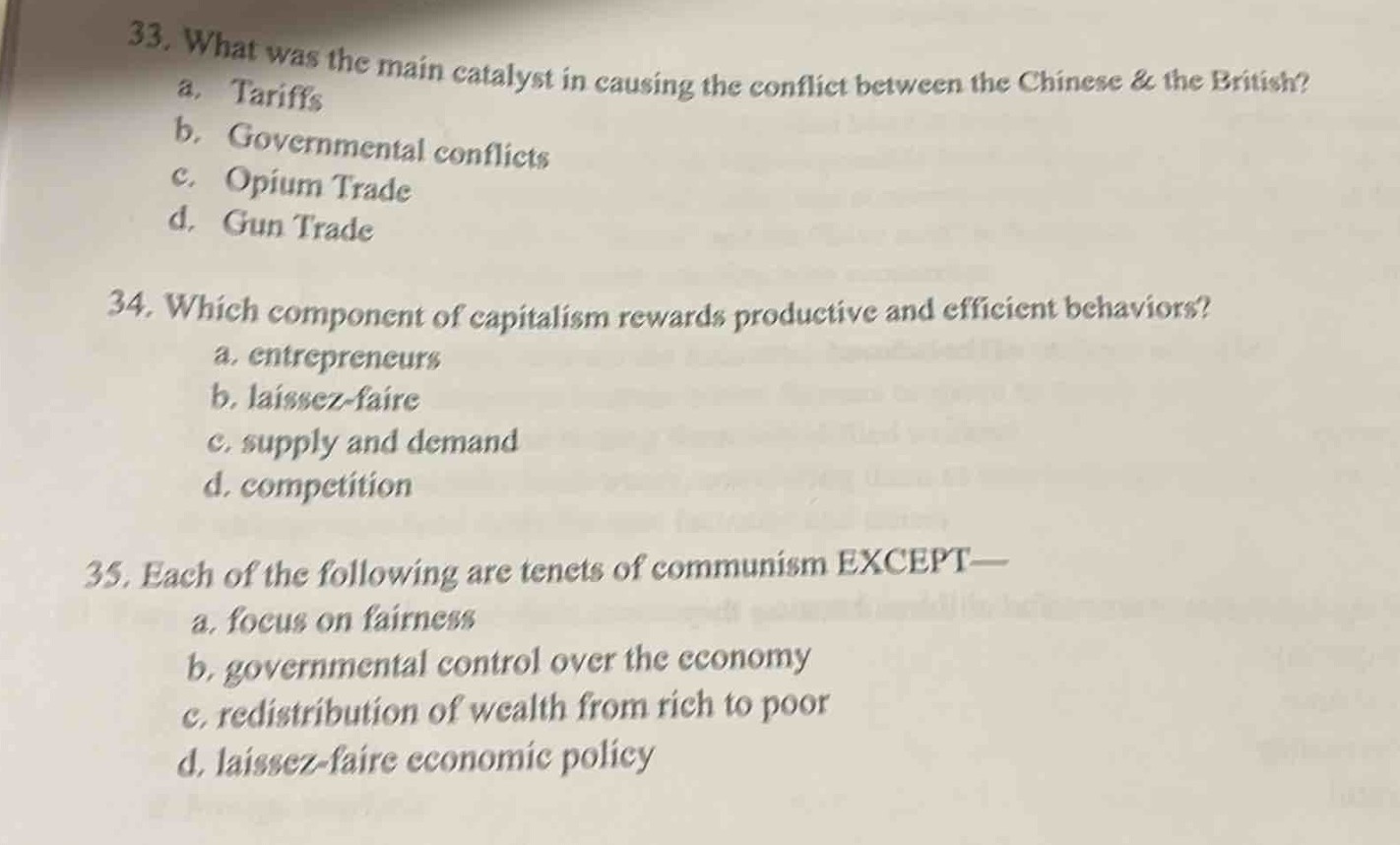
33. what was the main catalyst in causing the conflict between the chinese & the british?\na. tariffs\nb. governmental conflicts\nc. opium trade\nd. gun trade\n\n34. which component of capitalism rewards productive and efficient behaviors?\na. entrepreneurs\nb. laissez - faire\nc. supply and demand\nd. competition\n\n35. each of the following are tenets of communism except—\na. focus on fairness\nb. governmental control over the economy\nc. redistribution of wealth from rich to poor\nd. laissez - faire economic policy
Answer
Answer:
- c. Opium Trade
- d. competition
- d. laissez - faire economic policy
Brief Explanations:
- The Opium Trade was a major cause of conflict between China and Britain, leading to the Opium Wars.
- In capitalism, competition rewards productive and efficient behaviors as firms strive to out - perform rivals.
- Laissez - faire is a free - market concept, not a tenet of communism which emphasizes government control and fairness in wealth distribution.