activity b: surface area and concentration\nget the gizmo ready:\n- click reset.\n- check that the catalyst…
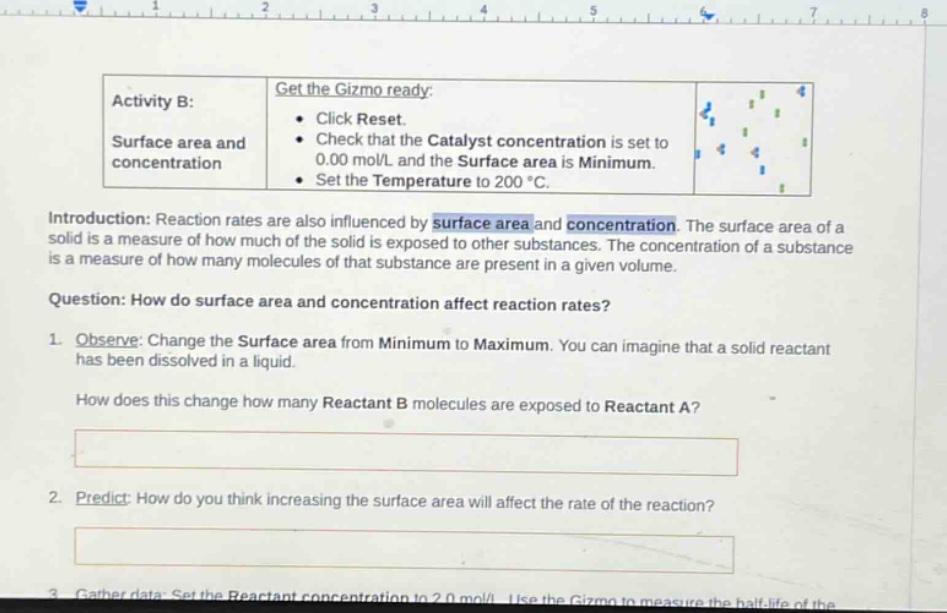
activity b: surface area and concentration\nget the gizmo ready:\n- click reset.\n- check that the catalyst concentration is set to 0.00 mol/l and the surface area is minimum.\n- set the temperature to 200 °c.\nintroduction: reaction rates are also influenced by surface area and concentration. the surface area of a solid is a measure of how much of the solid is exposed to other substances. the concentration of a substance is a measure of how many molecules of that substance are present in a given volume.\nquestion: how do surface area and concentration affect reaction rates?\n1. observe: change the surface area from minimum to maximum. you can imagine that a solid reactant has been dissolved in a liquid.\nhow does this change how many reactant b molecules are exposed to reactant a?\n2. predict: how do you think increasing the surface area will affect the rate of the reaction?
Answer
Explanation:
Step1: Understand surface - area concept
When the surface area of a solid reactant (imagined as dissolved in liquid here) changes from minimum to maximum, more of the solid is exposed. For Reactant B molecules, more of them become accessible to Reactant A. So, the number of Reactant B molecules exposed to Reactant A increases.
Step2: Consider reaction - rate relationship
Reaction rate is based on the frequency of effective collisions between reactant molecules. When the surface area increases, there are more exposed Reactant B molecules available for collision with Reactant A. Since there are more opportunities for collisions, the rate of the reaction is expected to increase.
Answer:
- More Reactant B molecules are exposed to Reactant A.
- The rate of the reaction will increase.