how does a balanced chemical equation satisfy the law of conservation of mass?\nduring a chemical reaction…
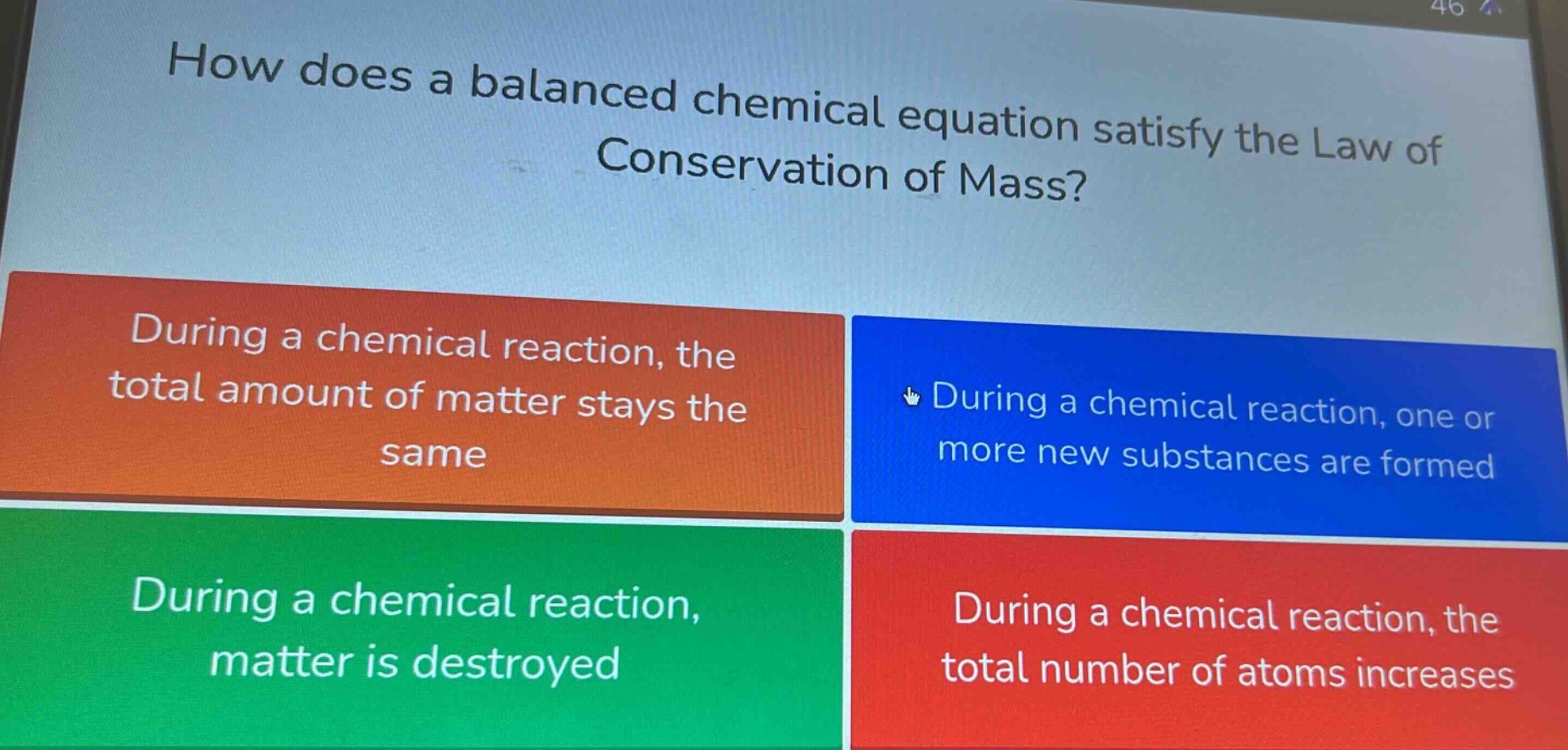
how does a balanced chemical equation satisfy the law of conservation of mass?\nduring a chemical reaction, the total amount of matter stays the same\nduring a chemical reaction, one or more new substances are formed\nduring a chemical reaction, matter is destroyed\nduring a chemical reaction, the total number of atoms increases
Answer
Answer:
During a chemical reaction, the total amount of matter stays the same
Brief Explanation:
The Law of Conservation of Mass states that in a chemical reaction, matter is neither created nor destroyed. A balanced chemical equation has the same number of each type of atom on both the reactant and product sides, ensuring the total amount of matter remains constant.