this chart shows characteristics of three different types of atoms. valance electrons in three types of…
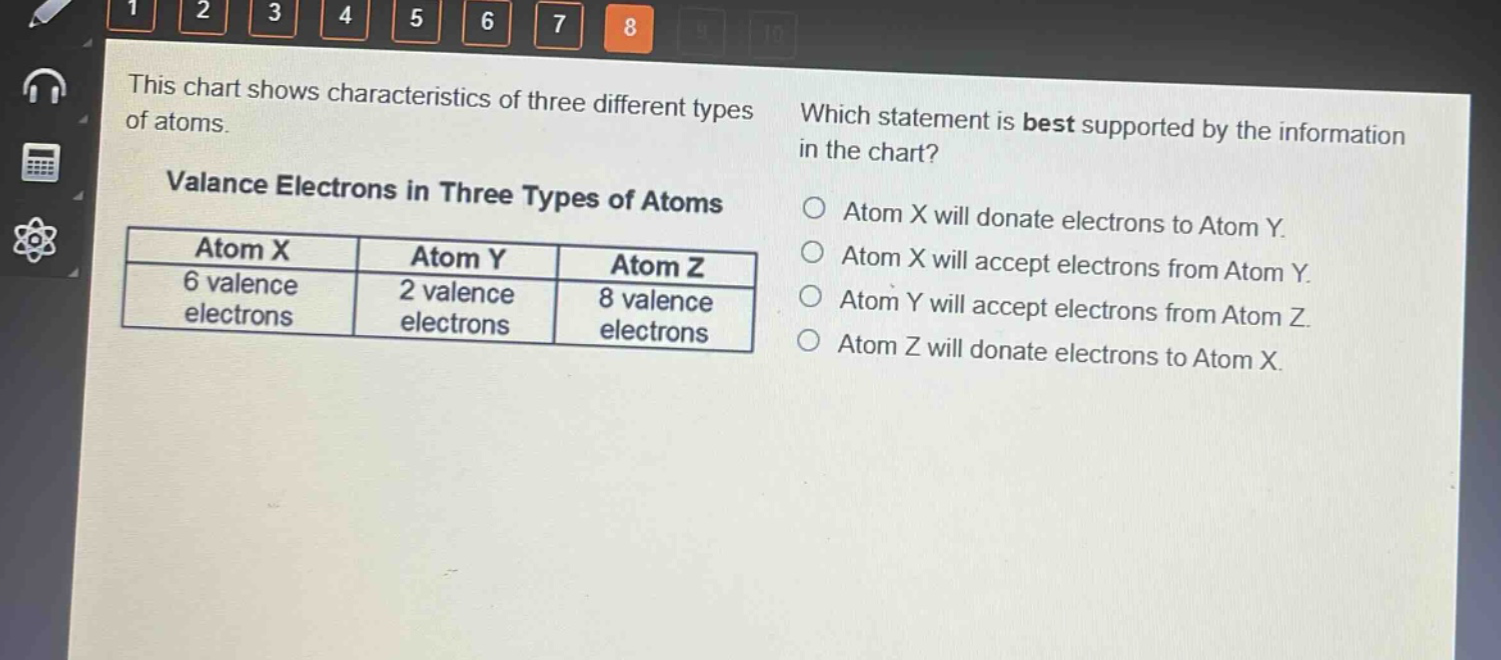
this chart shows characteristics of three different types of atoms. valance electrons in three types of atoms atom x 6 valence electrons atom y 2 valence electrons atom z 8 valence electrons which statement is best supported by the information in the chart? atom x will donate electrons to atom y. atom x will accept electrons from atom y. atom y will accept electrons from atom z. atom z will donate electrons to atom x.
Answer
Explanation:
Step1: Understand electron - donation/acceptance rules
Atoms tend to gain, lose, or share electrons to achieve a stable electron configuration (usually 8 valence electrons, except for some small atoms). Atom X has 6 valence electrons and needs 2 more to be stable. Atom Y has 2 valence electrons and is likely to donate them. Atom Z has 8 valence electrons and is already stable.
Step2: Analyze each option
- Option 1: Atom X needs electrons and Atom Y has electrons to donate, so Atom X will accept electrons from Atom Y, not donate.
- Option 2: Atom X has 6 valence electrons and needs 2 more to complete its octet. Atom Y has 2 valence electrons and is likely to donate them to Atom X to achieve a stable configuration. This is correct.
- Option 3: Atom Z is already stable with 8 valence electrons and will not donate electrons to other atoms easily, and Atom Y is more likely to donate electrons rather than accept.
- Option 4: Atom Z is stable and will not donate electrons to Atom X.