i. a chemical change breaks bonds, forms new substances and is irreversible.\nii. reordering the…
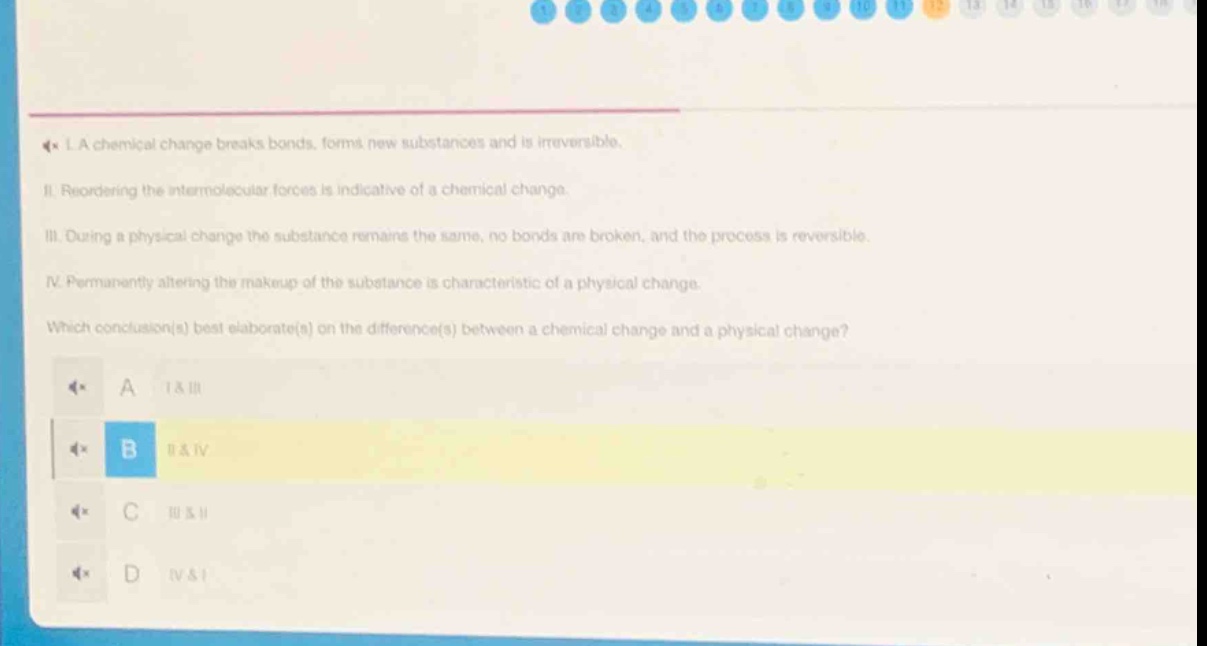
i. a chemical change breaks bonds, forms new substances and is irreversible.\nii. reordering the intermolecular forces is indicative of a chemical change.\niii. during a physical change the substance remains the same, no bonds are broken, and the process is reversible.\niv. permanently altering the makeup of the substance is characteristic of a physical change.\nwhich conclusion(s) best elaborate(s) on the difference(s) between a chemical change and a physical change?\na i & iii\nb ii & iv\nc iii & ii\nd iv & i
Answer
Brief Explanations:
A chemical change involves bond - breaking and new substance formation, and is irreversible (Statement I). A physical change means the substance remains the same, no bonds are broken, and it is reversible (Statement III). Statement II is incorrect as re - ordering intermolecular forces is more related to physical changes. Statement IV is incorrect as permanently altering the substance's makeup is characteristic of a chemical change. So, statements I and III best elaborate the difference.
Answer:
A. I & III