3. describe how atomic size changes for each of the following examples. for each example, explain why the…
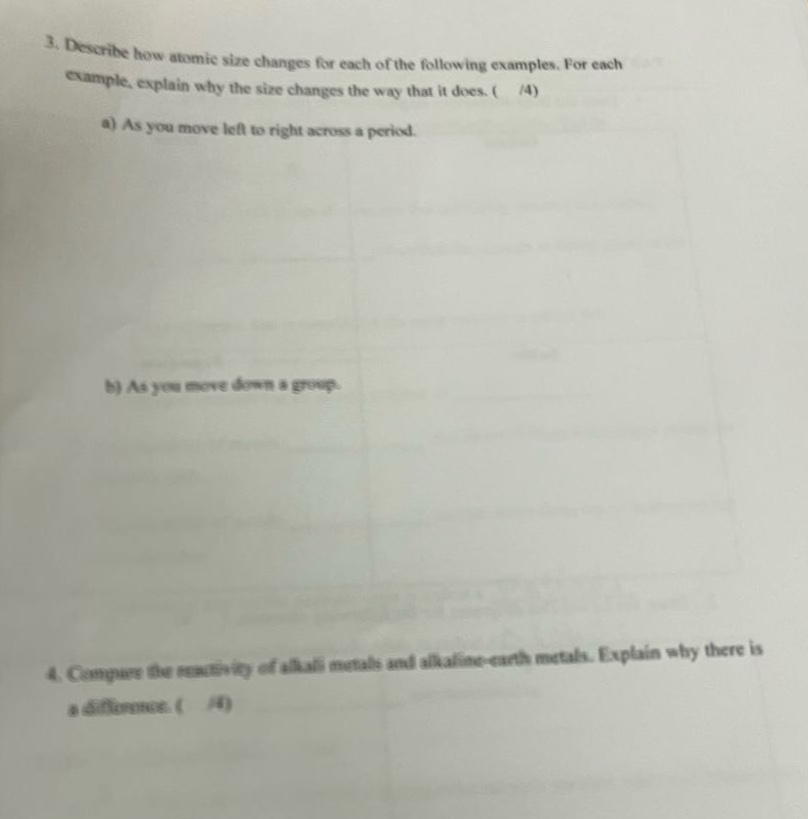
3. describe how atomic size changes for each of the following examples. for each example, explain why the size changes the way that it does. ( /4) a) as you move left to right across a period. b) as you move down a group. 4. compare the reactivity of alkali metals and alkaline - earth metals. explain why there is a difference. ( /4)
Answer
Brief Explanations:
a) As you move left to right across a period, atomic size decreases. This is because the number of protons and electrons increases, and the increased nuclear - charge pulls the electrons closer. b) As you move down a group, atomic size increases. This is due to the addition of new electron shells, which increase the distance between the nucleus and the outermost electrons. For comparing reactivity of alkali metals and alkaline - earth metals: Alkali metals are more reactive than alkaline - earth metals. Alkali metals have one valence electron and need to lose it to achieve a stable electron configuration. Alkaline - earth metals have two valence electrons and require more energy to lose them.
Answer:
a) Atomic size decreases across a period due to increased nuclear charge pulling electrons closer. b) Atomic size increases down a group due to addition of electron shells. Alkali metals are more reactive as they have one valence electron and it is easier to lose compared to two valence electrons in alkaline - earth metals.