directions: classify the following as being a physical (p) or chemical (c) change.\n1. sodium hydroxide…
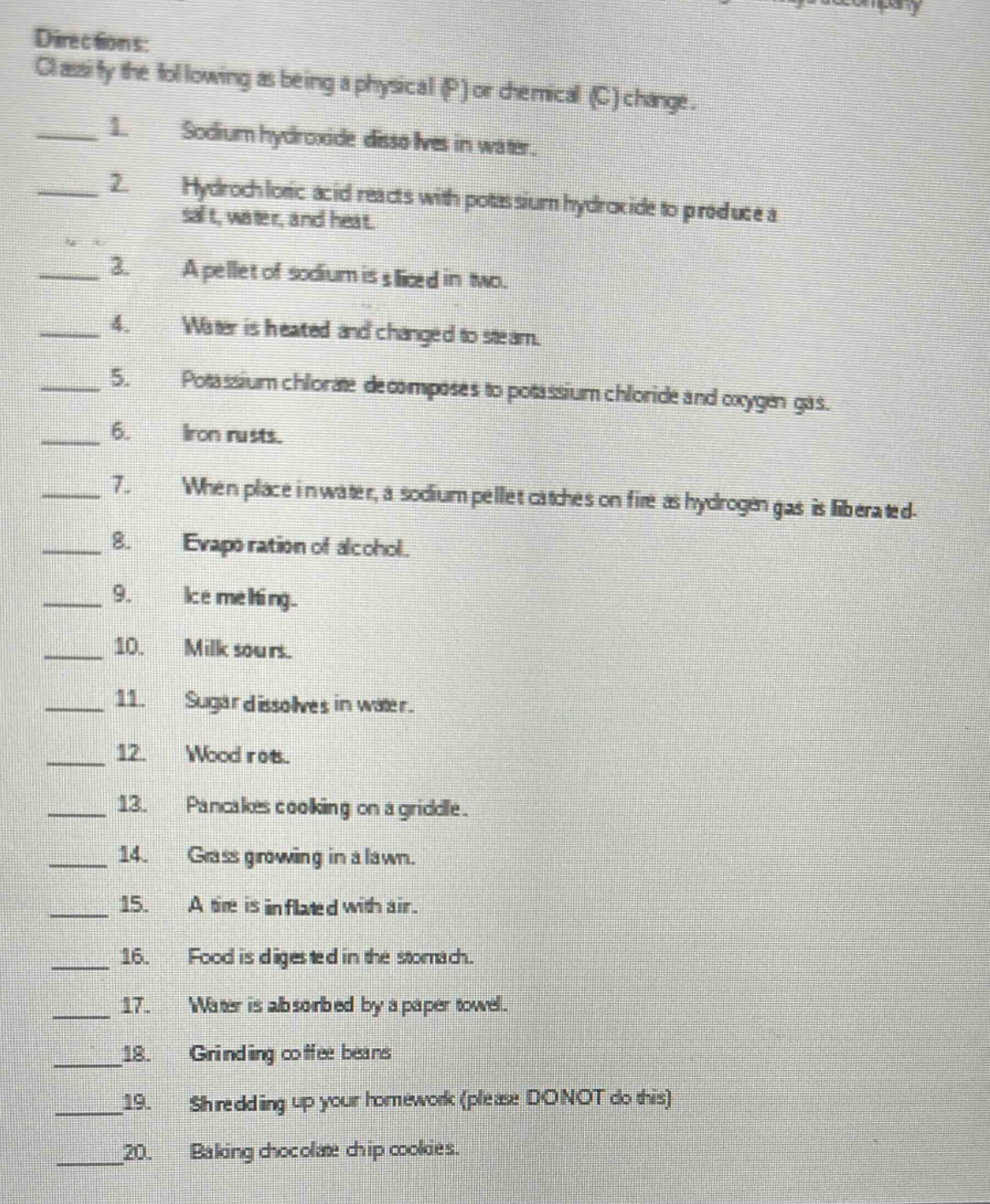
directions: classify the following as being a physical (p) or chemical (c) change.\n1. sodium hydroxide dissolves in water.\n2. hydrochloric acid reacts with potassium hydroxide to produce a salt, water, and heat.\n3. a pellet of sodium is sliced in two.\n4. water is heated and changed to steam.\n5. potassium chlorate decomposes to potassium chloride and oxygen gas.\n6. iron rusts.\n7. when placed in water, a sodium pellet catches on fire as hydrogen gas is liberated.\n8. evaporation of alcohol.\n9. ice melting.\n10. milk sours.\n11. sugar dissolves in water.\n12. wood rots.\n13. pancakes cooking on a griddle.\n14. grass growing in a lawn.\n15. a tire is inflated with air.\n16. food is digested in the stomach.\n17. water is absorbed by a paper towel.\n18. grinding coffee beans.\n19. shredding up your homework (please donot do this)\n20. baking chocolate chip cookies.
Answer
Brief Explanations:
- Sodium hydroxide dissolving in water is a physical change as no new substances are formed chemically, just a dissolution process.
- Hydrochloric acid reacting with potassium hydroxide to produce a salt, water, and heat is a chemical change as new substances are formed through a chemical reaction.
- Slicing a sodium pellet is a physical change as it only changes the physical form and no new substances are created.
- Water changing to steam upon heating is a physical change as it is a phase - change and no new chemical substances are formed.
- Decomposition of potassium chlorate to potassium chloride and oxygen gas is a chemical change as new substances are formed.
- Iron rusting is a chemical change as iron reacts with oxygen and moisture to form iron oxide (rust), a new substance.
- Sodium reacting with water to produce hydrogen gas and catch fire is a chemical change due to the formation of new substances.
- Evaporation of alcohol is a physical change as it is a phase - change from liquid to gas without forming new chemical substances.
- Ice melting is a physical change as it is a phase - change from solid to liquid without a chemical reaction.
- Milk souring is a chemical change as bacteria cause chemical reactions to produce acidic substances.
- Sugar dissolving in water is a physical change as it is a dissolution process with no new chemical substances formed.
- Wood rotting is a chemical change as microorganisms cause chemical reactions to break down the wood.
- Pancakes cooking on a griddle is a chemical change as heat causes chemical reactions in the batter.
- Grass growing in a lawn is a chemical change as it involves complex biochemical reactions.
- Inflating a tire with air is a physical change as it only changes the volume and pressure of the air in the tire, no new substances are formed.
- Food digestion in the stomach is a chemical change as enzymes break down food into new substances.
- Water being absorbed by a paper towel is a physical change as it is a physical adsorption process with no new chemical substances formed.
- Grinding coffee beans is a physical change as it only changes the physical form of the beans.
- Shredding homework is a physical change as it only changes the physical form of the paper.
- Baking chocolate - chip cookies is a chemical change as heat causes chemical reactions in the dough.
Answer:
- P
- C
- P
- P
- C
- C
- C
- P
- P
- C
- P
- C
- C
- C
- P
- C
- P
- P
- P
- C