element atomic mass (amu) total electrons valence electrons year isolated\naluminum (al) 27 13 3 1825\nboron…
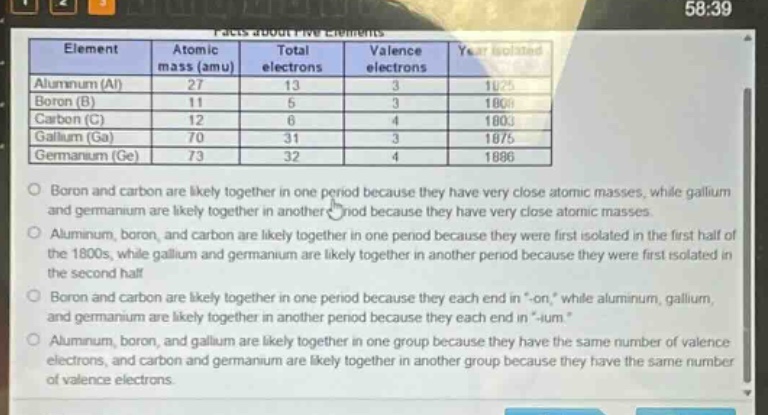
element atomic mass (amu) total electrons valence electrons year isolated\naluminum (al) 27 13 3 1825\nboron (b) 11 5 3 1808\ncarbon (c) 12 6 4 1803\ngallium (ga) 70 31 3 1875\ngermanium (ge) 73 32 4 1886\n\nboron and carbon are likely together in one period because they have very close atomic masses, while gallium and germanium are likely together in another period because they have very close atomic masses.\naluminum, boron, and carbon are likely together in one period because they were first isolated in the first half of the 1800s, while gallium and germanium are likely together in another period because they were first isolated in the second half.\nboron and carbon are likely together in one period because they each end in \-on,\ while aluminum, gallium, and germanium are likely together in another period because they each end in \-ium.\\naluminum, boron, and gallium are likely together in one group because they have the same number of valence electrons, and carbon and germanium are likely together in another group because they have the same number of valence electrons.
Answer
Brief Explanations:
The periodic table organizes elements based on their atomic structure and chemical properties. Elements in the same vertical column, known as a group, typically have the same number of valence electrons. Valence electrons are the electrons in the outermost shell of an atom and largely determine an element's chemical behavior. According to the provided table:
- Aluminum (Al), Boron (B), and Gallium (Ga) each have 3 valence electrons. This similarity suggests they belong to the same group (Group 13).
- Carbon (C) and Germanium (Ge) each have 4 valence electrons. This similarity suggests they belong to another group (Group 14). Other factors mentioned in the incorrect options, such as atomic mass similarity, year of isolation, or name endings, are not the primary criteria for grouping elements in the periodic table.
Answer:
Aluminum, boron, and gallium are likely together in one group because they have the same number of valence electrons, and carbon and germanium are likely together in another group because they have the same number of valence electrons.