which of these is an example of a physical change?\n sugar, when heated, producing carbon dioxide and…
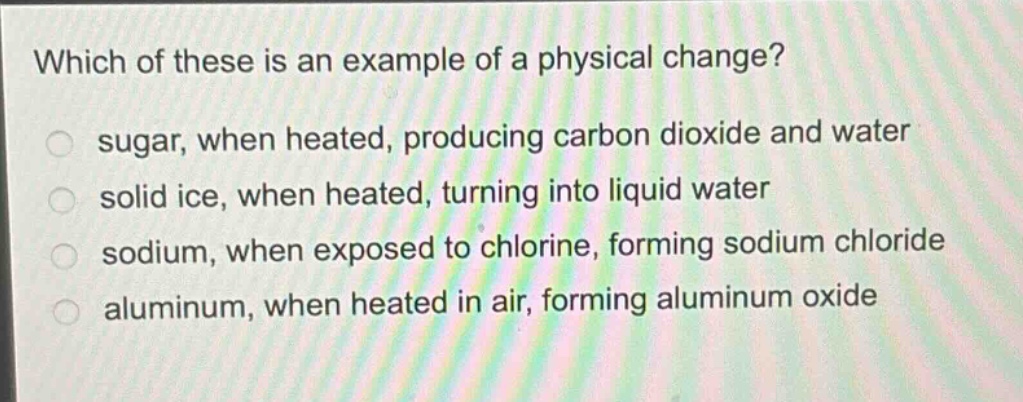
which of these is an example of a physical change?\n sugar, when heated, producing carbon dioxide and water\n solid ice, when heated, turning into liquid water\n sodium, when exposed to chlorine, forming sodium chloride\n aluminum, when heated in air, forming aluminum oxide
Answer
Brief Explanations:
A physical change is a change in which the form or state of matter changes, but no new substances are formed. When solid ice is heated and turns into liquid water, it is just a change of state from solid to liquid without the formation of new chemical substances. In the other options, new substances like carbon dioxide and water (from sugar), sodium chloride (from sodium and chlorine), and aluminum oxide (from aluminum and air) are formed, which are chemical changes.
Answer:
solid ice, when heated, turning into liquid water