melting - short answer worksheet\nanswer the following questions about the process of melting:\n1. what is…
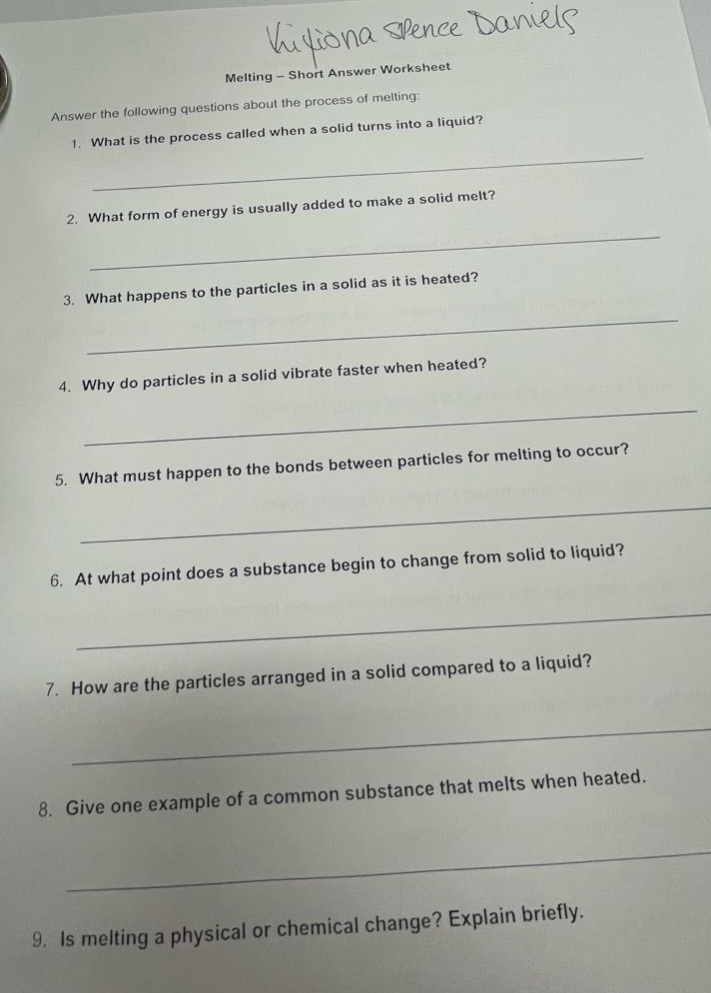
melting - short answer worksheet\nanswer the following questions about the process of melting:\n1. what is the process called when a solid turns into a liquid?\n2. what form of energy is usually added to make a solid melt?\n3. what happens to the particles in a solid as it is heated?\n4. why do particles in a solid vibrate faster when heated?\n5. what must happen to the bonds between particles for melting to occur?\n6. at what point does a substance begin to change from solid to liquid?\n7. how are the particles arranged in a solid compared to a liquid?\n8. give one example of a common substance that melts when heated.\n9. is melting a physical or chemical change? explain briefly.
Answer
Brief Explanations:
- Melting is the term for a solid - to - liquid phase change.
- Heat energy is typically added to melt a solid.
- As a solid is heated, its particles gain kinetic energy and vibrate more vigorously.
- Heating provides particles with more kinetic energy, causing faster vibration.
- For melting to occur, the intermolecular bonds between particles must weaken.
- A substance begins to change from solid to liquid at its melting point.
- In a solid, particles are more closely packed and in a more ordered arrangement compared to a liquid.
- Ice is a common substance that melts when heated.
- Melting is a physical change because the substance's chemical composition remains the same; only its physical state changes.
Answer:
- Melting
- Heat energy
- The particles vibrate more vigorously.
- Because they gain kinetic energy from the heat.
- The intermolecular bonds must weaken.
- At its melting point.
- In a solid, particles are more closely - packed and more ordered.
- Ice
- Physical change; the chemical composition doesn't change, only the physical state does.