part c: structures of polymers\ngo to the website and answer the questions below:\nhttps://plastics.americanc…
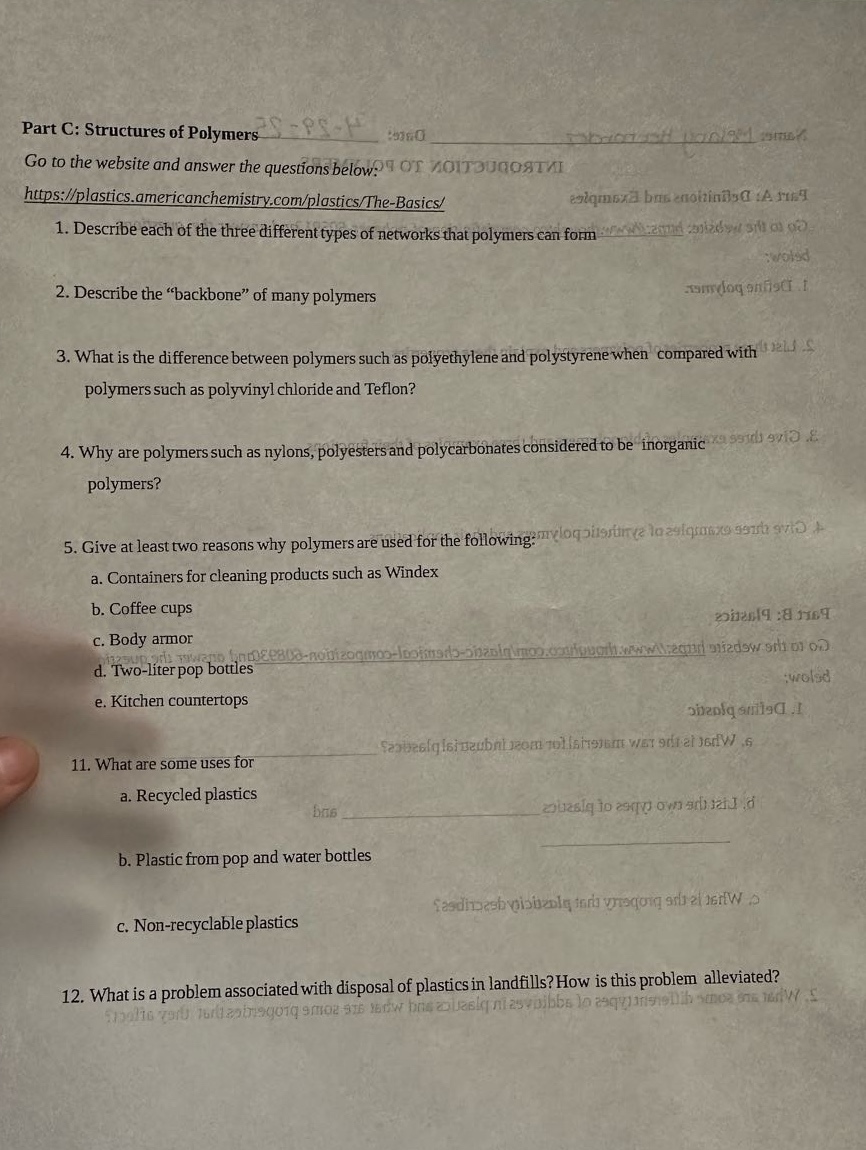
part c: structures of polymers\ngo to the website and answer the questions below:\nhttps://plastics.americanchemistry.com/plastics/the - basics/\n1. describe each of the three different types of networks that polymers can form\n2. describe the “backbone” of many polymers\n3. what is the difference between polymers such as polyethylene and polystyrene when compared with polymers such as polyvinyl chloride and teflon?\n4. why are polymers such as nylons, polyesters and polycarbonates considered to be inorganic polymers?\n5. give at least two reasons why polymers are used for the following:\na. containers for cleaning products such as windex\nb. coffee cups\nc. body armor\nd. two - liter pop bottles\ne. kitchen countertops\n11. what are some uses for\na. recycled plastics\nb. plastic from pop and water bottles\nc. non - recyclable plastics\n12. what is a problem associated with disposal of plastics in landfills? how is this problem alleviated?
Answer
Brief Explanations:
- Polymers can form three types of networks: linear, branched, and cross - linked. Linear polymers have a straight - chain structure. Branched polymers have side chains attached to the main chain. Cross - linked polymers have covalent bonds between different polymer chains, creating a three - dimensional network.
- The "backbone" of many polymers is a long chain of carbon atoms, often with other atoms like hydrogen, oxygen, nitrogen, or chlorine attached.
- Polyethylene and polystyrene are hydrocarbons (composed mainly of carbon and hydrogen), while polyvinyl chloride contains chlorine and Teflon (polytetrafluoroethylene) contains fluorine. The presence of these halogen atoms (chlorine and fluorine) gives polyvinyl chloride and Teflon different chemical and physical properties compared to polyethylene and polystyrene.
- Nylons, polyesters, and polycarbonates are organic polymers, not inorganic. They are composed of carbon - containing monomers linked together by covalent bonds.
-
- a. For containers for cleaning products like Windex: Polymers are chemically resistant to the cleaning agents, and they are lightweight and shatter - resistant.
- b. For coffee cups: Polymers are heat - resistant (some types), lightweight, and can be molded into different shapes.
- c. For body armor: Polymers are strong and lightweight, providing protection while allowing for mobility.
- d. For two - liter pop bottles: Polymers are gas - impermeable to keep the carbonation in, and they are shatter - resistant and lightweight.
- e. For kitchen countertops: Polymers are durable, resistant to stains and scratches, and easy to clean.
- a. Recycled plastics can be used to make new plastic products like plastic lumber, park benches, and some types of clothing.
- b. Plastic from pop and water bottles can be recycled into fibers for carpets, fleece clothing, and new bottles.
- c. Non - recyclable plastics can be used for energy recovery through incineration (in some cases where proper pollution control is in place).
- A problem associated with disposal of plastics in landfills is that they take a very long time to decompose (hundreds to thousands of years), and they can release harmful chemicals as they break down slowly. This problem can be alleviated by recycling more plastics, reducing the amount sent to landfills, and using biodegradable plastics.
Answer:
- Linear: Straight - chain structure; Branched: Side chains on main chain; Cross - linked: Three - dimensional network via covalent bonds between chains.
- Long chain of carbon atoms, often with other atoms attached.
- Polyethylene and polystyrene are hydrocarbons, while polyvinyl chloride has chlorine and Teflon has fluorine, giving different properties.
- They are organic polymers, not inorganic, composed of carbon - containing monomers.
-
- a. Chemically resistant, lightweight, shatter - resistant.
- b. Heat - resistant, lightweight, moldable.
- c. Strong, lightweight.
- d. Gas - impermeable, shatter - resistant, lightweight.
- e. Durable, stain/scratch - resistant, easy to clean.
- a. New plastic products like plastic lumber, park benches, clothing.
- b. Fibers for carpets, fleece clothing, new bottles.
- c. Energy recovery through incineration (with pollution control).
- Problem: Long decomposition time, potential chemical release. Alleviation: Recycling, using biodegradable plastics.