select the correct answer. samuel adds a teaspoon of salt to a glass of water. he notices that the salt…
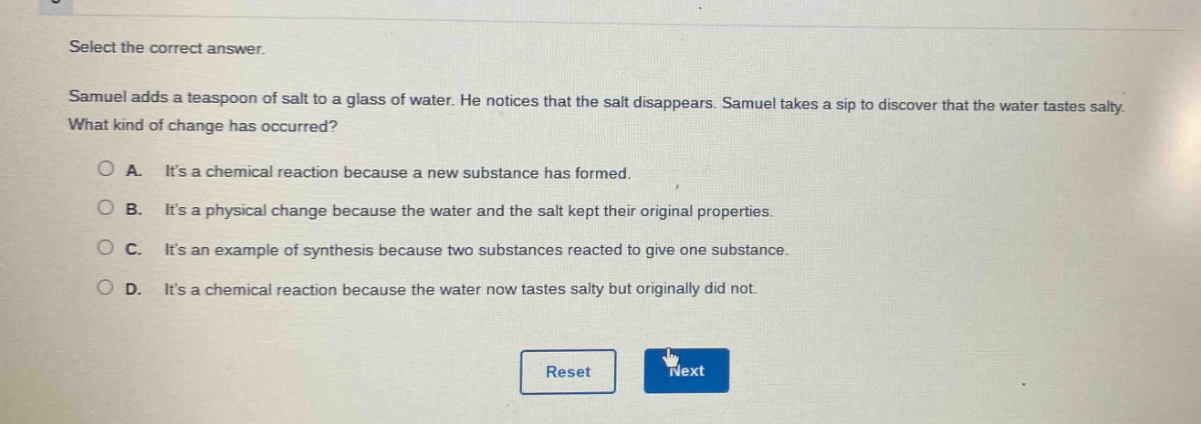
select the correct answer. samuel adds a teaspoon of salt to a glass of water. he notices that the salt disappears. samuel takes a sip to discover that the water tastes salty. what kind of change has occurred?\n\na. its a chemical reaction because a new substance has formed.\n\nb. its a physical change because the water and the salt kept their original properties.\n\nc. its an example of synthesis because two substances reacted to give one substance.\n\nd. its a chemical reaction because the water now tastes salty but originally did not.
Answer
Brief Explanations:
When salt dissolves in water, it is a physical change. The salt and water do not form a new chemical substance. The salt dissociates into ions in water but both salt and water retain their original chemical properties. In a chemical reaction, new substances with different chemical properties are formed. Synthesis is a type of chemical reaction where two or more substances combine to form a new substance. The taste change is just a result of the salt being dispersed in water, not a sign of a chemical reaction.
Answer:
B. It's a physical change because the water and the salt kept their original properties.