frictional unemployment\na is present even when labor markets are working well.\nb is the result of worker…
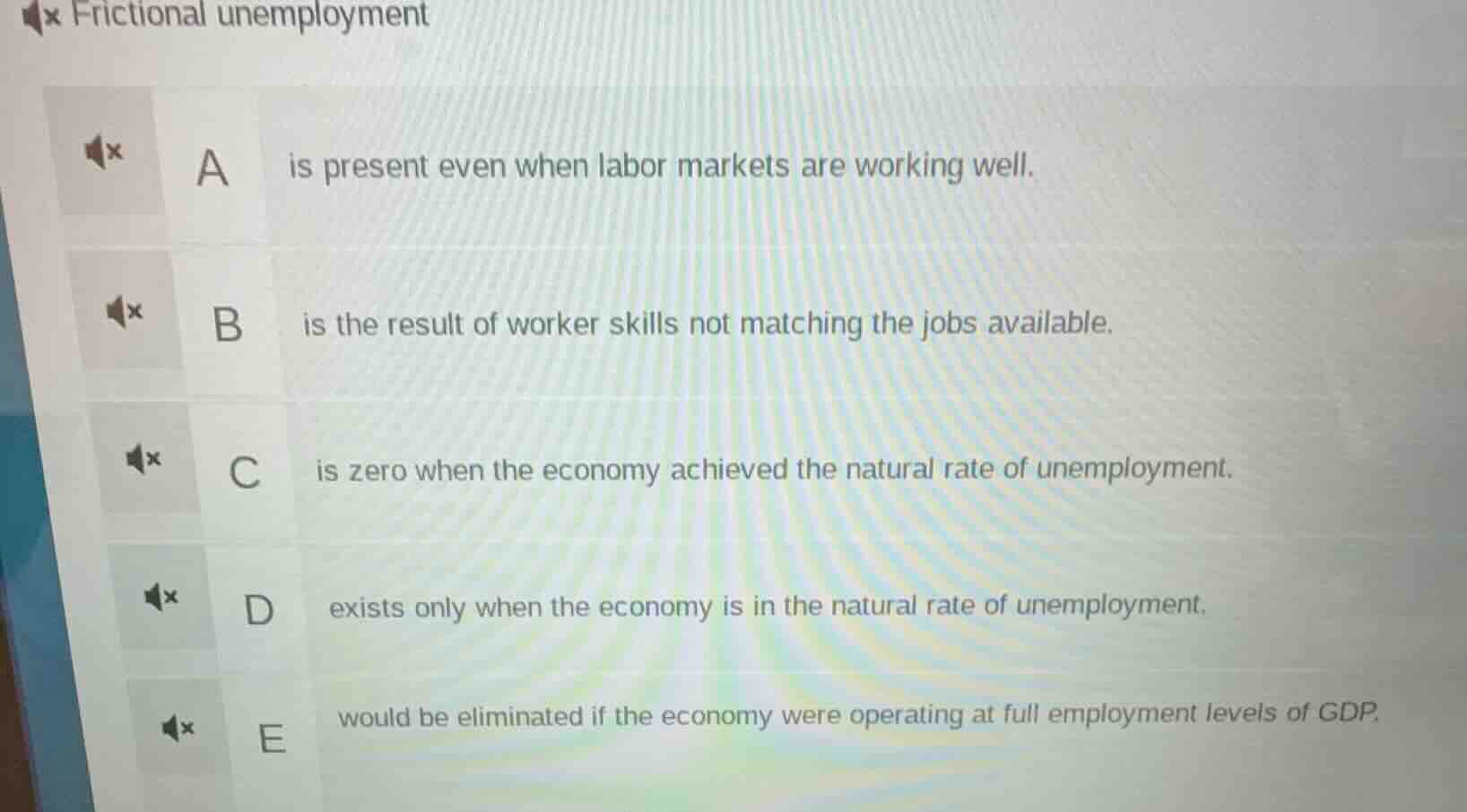
frictional unemployment\na is present even when labor markets are working well.\nb is the result of worker skills not matching the jobs available.\nc is zero when the economy achieved the natural rate of unemployment.\nd exists only when the economy is in the natural rate of unemployment.\ne would be eliminated if the economy were operating at full employment levels of gdp.
Answer
Brief Explanations:
- Option A: Frictional unemployment comes from normal labor market turnover (e.g., workers changing jobs, new entrants) and exists even in well-functioning labor markets.
- Option B: This describes structural unemployment, not frictional.
- Option C: The natural rate of unemployment includes frictional unemployment, so it is not zero at this rate.
- Option D: Frictional unemployment exists in all economic states, not just at the natural rate of unemployment.
- Option E: Full employment (which aligns with the natural rate of unemployment) still includes frictional unemployment, so it would not be eliminated.
Answer:
A. is present even when labor markets are working well.