from previous experience, the owner of an apple orchard knows that the mean weight of gala apples is 140…
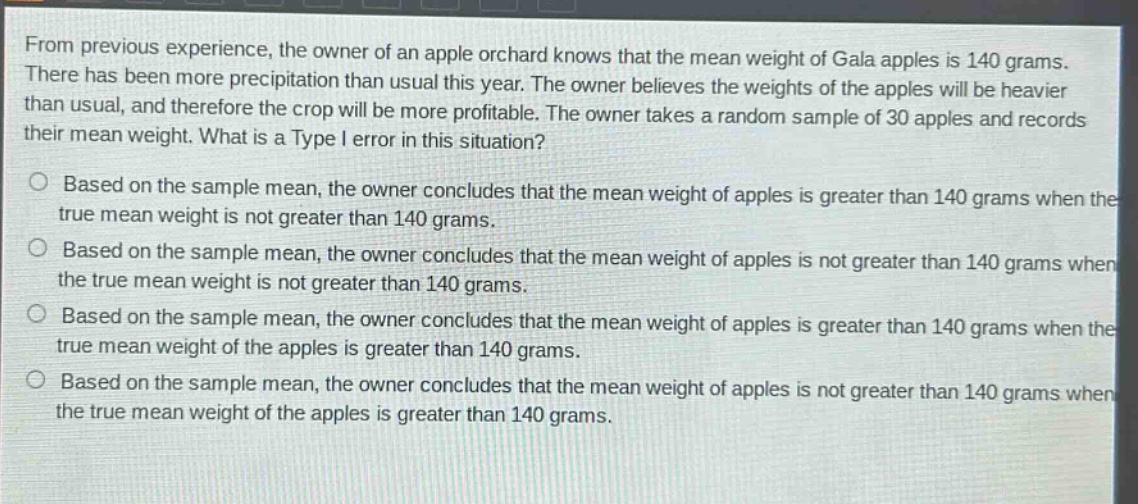
from previous experience, the owner of an apple orchard knows that the mean weight of gala apples is 140 grams. there has been more precipitation than usual this year. the owner believes the weights of the apples will be heavier than usual, and therefore the crop will be more profitable. the owner takes a random sample of 30 apples and records their mean weight. what is a type i error in this situation?\no based on the sample mean, the owner concludes that the mean weight of apples is greater than 140 grams when the true mean weight is not greater than 140 grams.\no based on the sample mean, the owner concludes that the mean weight of apples is not greater than 140 grams when the true mean weight is not greater than 140 grams.\no based on the sample mean, the owner concludes that the mean weight of apples is greater than 140 grams when the true mean weight of the apples is greater than 140 grams.\no based on the sample mean, the owner concludes that the mean weight of apples is not greater than 140 grams when the true mean weight of the apples is greater than 140 grams.
Answer
Brief Explanations:
A Type - I error occurs when we reject a null hypothesis that is actually true. In this case, the null hypothesis is that the mean weight of apples is not greater than 140 grams. Rejecting this when it's true means concluding the mean weight is greater than 140 grams when it's not.
Answer:
Based on the sample mean, the owner concludes that the mean weight of apples is greater than 140 grams when the true mean weight is not greater than 140 grams.