select the four statements that are true about insurance. the deductible is the amount of money an insured…
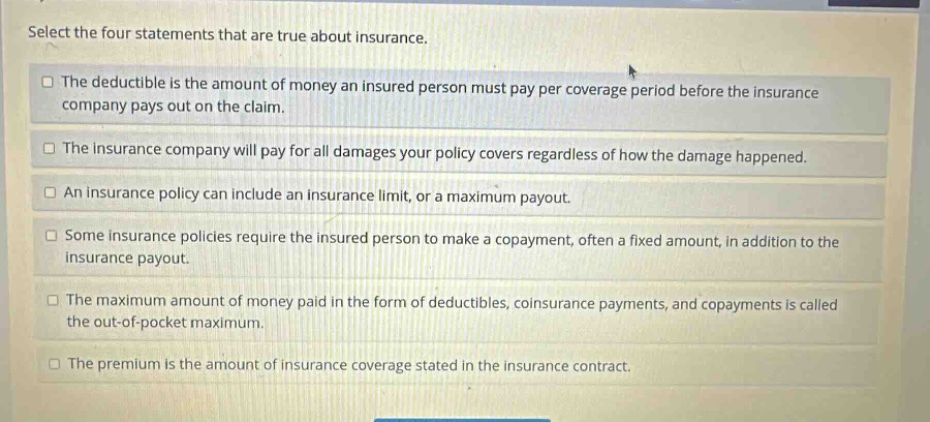
select the four statements that are true about insurance. the deductible is the amount of money an insured person must pay per coverage period before the insurance company pays out on the claim. the insurance company will pay for all damages your policy covers regardless of how the damage happened. an insurance policy can include an insurance limit, or a maximum payout. some insurance policies require the insured person to make a copayment, often a fixed amount, in addition to the insurance payout. the maximum amount of money paid in the form of deductibles, coinsurance payments, and copayments is called the out - of - pocket maximum. the premium is the amount of insurance coverage stated in the insurance contract.
Answer
Brief Explanations:
- The deductible is indeed the pre - claim payment by the insured per coverage period.
- Insurance companies have conditions for paying damages, not regardless of how damage occurs.
- Insurance policies often have a maximum payout or limit.
- Copayments are additional fixed - amount payments by the insured in some policies.
- The out - of - pocket maximum is the sum of deductibles, coinsurance, and copayments.
- The premium is the amount paid for insurance, not the coverage amount.
Answer:
- The deductible is the amount of money an insured person must pay per coverage period before the insurance company pays out on the claim.
- An insurance policy can include an insurance limit, or a maximum payout.
- Some insurance policies require the insured person to make a copayment, often a fixed amount, in addition to the insurance payout.
- The maximum amount of money paid in the form of deductibles, coinsurance payments, and copayments is called the out - of - pocket maximum.