choose the best translation of the following sentence.\ni will sleep later.\n○ dormirás luego.\n○ dormiremos…
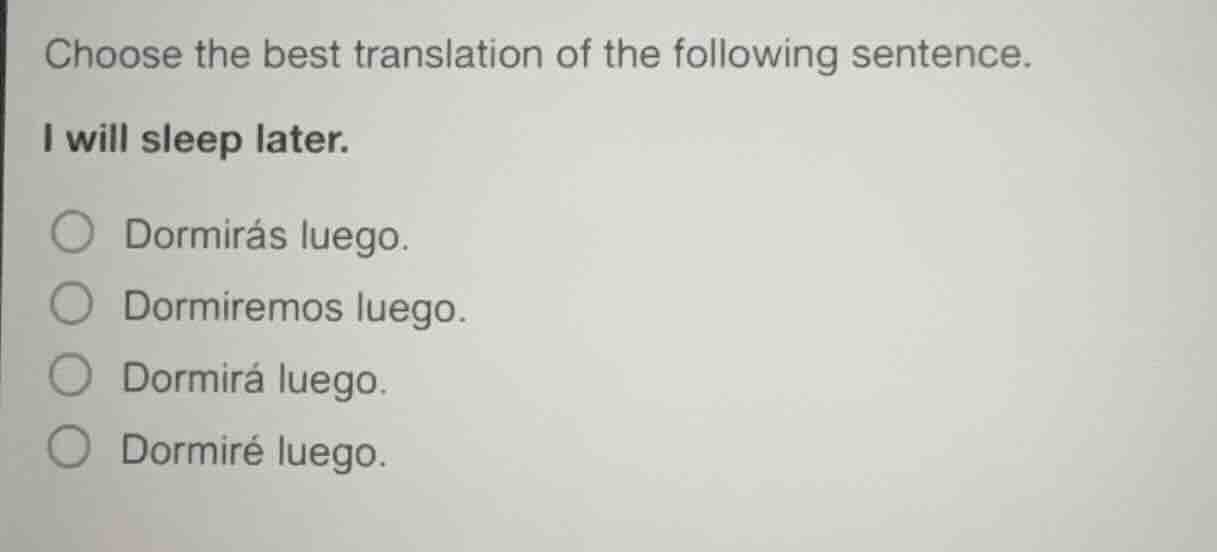
choose the best translation of the following sentence.\ni will sleep later.\n○ dormirás luego.\n○ dormiremos luego.\n○ dormirá luego.\n○ dormiré luego.
Answer
Brief Explanations:
The original sentence "I will sleep later" is in the first - person singular future tense in English. In Spanish, the verb "dormir" (to sleep) in the first - person singular future tense is "dormiré". Let's analyze each option:
- "Dormirás" is the second - person singular (tú) future tense of "dormir", so it means "You (informal) will sleep".
- "Dormiremos" is the first - person plural (nosotros) future tense, meaning "We will sleep".
- "Dormirá" is the third - person singular (él/ella/usted) future tense, meaning "He/She/You (formal) will sleep".
- "Dormiré" is the first - person singular (yo) future tense, which matches the subject "I" in the original sentence.
Answer:
D. Dormiré luego.