design process that moves from parts to whole\nlike a mission statement for a site\nisp\nfunctionality…
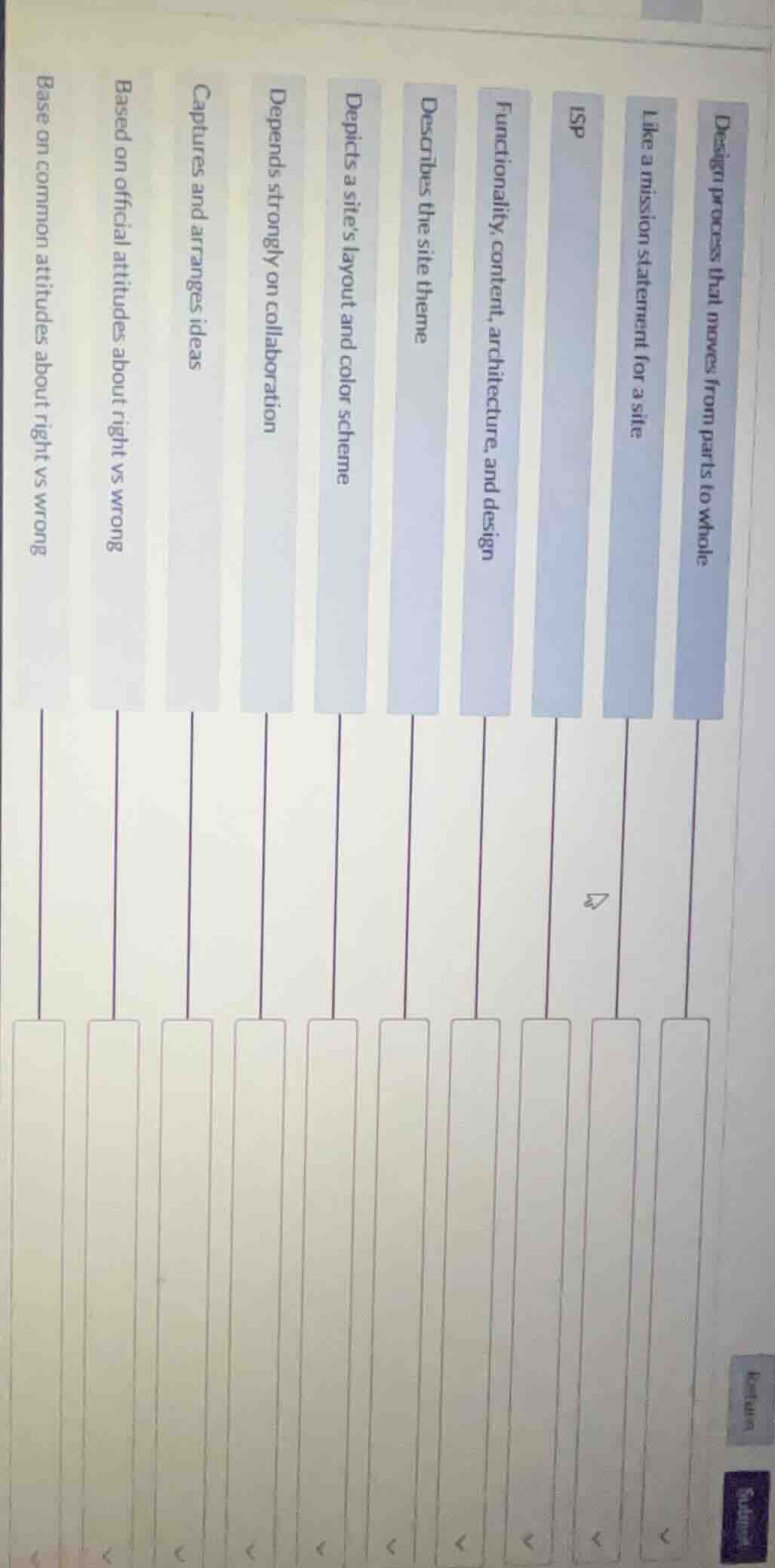
design process that moves from parts to whole\nlike a mission statement for a site\nisp\nfunctionality, content, architecture, and design\ndescribes the site theme\ndepicts a sites layout and color scheme\ndepends strongly on collaboration\ncaptures and arranges ideas\nbased on official attitudes about right vs wrong\nbase on common attitudes about right vs wrong
Answer
Brief Explanations:
The questions relate to web development processes, project management, and professional ethics.
- Bottom-up design is a process that starts with individual components and integrates them into a complete system.
- A Project Charter or Vision Statement serves as a mission statement for a website project.
- ISP stands for Internet Service Provider, which provides the infrastructure for hosting and accessing sites.
- A Project Plan or Specification outlines the functionality, content, architecture, and design.
- A Style Guide or Mood Board describes the site theme.
- A Storyboard or Wireframe depicts the site's layout and color scheme.
- Agile or Collaborative Design depends strongly on teamwork and communication.
- Brainstorming or Mind Mapping captures and arranges ideas.
- Laws are based on official attitudes and regulations regarding right vs. wrong.
- Ethics are based on common social attitudes and moral principles about right vs. wrong.
Answer:
- Bottom-up design: Design process that moves from parts to whole
- Project Charter: Like a mission statement for a site
- Internet Service Provider: ISP
- Project Plan: Functionality, content, architecture, and design
- Style Guide: Describes the site theme
- Storyboard: Depicts a site's layout and color scheme
- Collaborative Design: Depends strongly on collaboration
- Brainstorming: Captures and arranges ideas
- Laws: Based on official attitudes about right vs wrong
- Ethics: Base on common attitudes about right vs wrong