which is an example of dramatic irony in act v, scene iii of romeo and juliet?\nromeo thought juliet was…
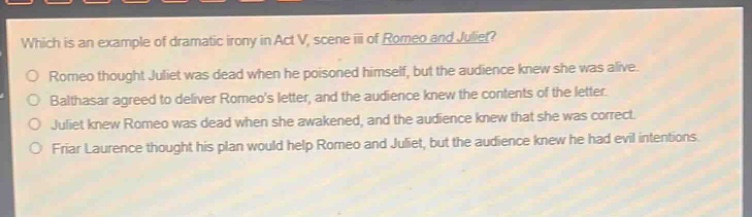
which is an example of dramatic irony in act v, scene iii of romeo and juliet?\nromeo thought juliet was dead when he poisoned himself, but the audience knew she was alive.\nbalthasar agreed to deliver romeos letter, and the audience knew the contents of the letter.\njuliet knew romeo was dead when she awakened, and the audience knew that she was correct.\nfriar laurence thought his plan would help romeo and juliet, but the audience knew he had evil intentions.
Answer
Answer:
A. Romeo thought Juliet was dead when he poisoned himself, but the audience knew she was alive.
Brief Explanations:
Dramatic irony occurs when the audience knows something the characters don't. Here, the audience is aware Juliet is alive while Romeo believes she's dead, creating irony.