which narrative point of view is shown in the passage? \you are loathsome to me, repulsive!\ she shrieked…
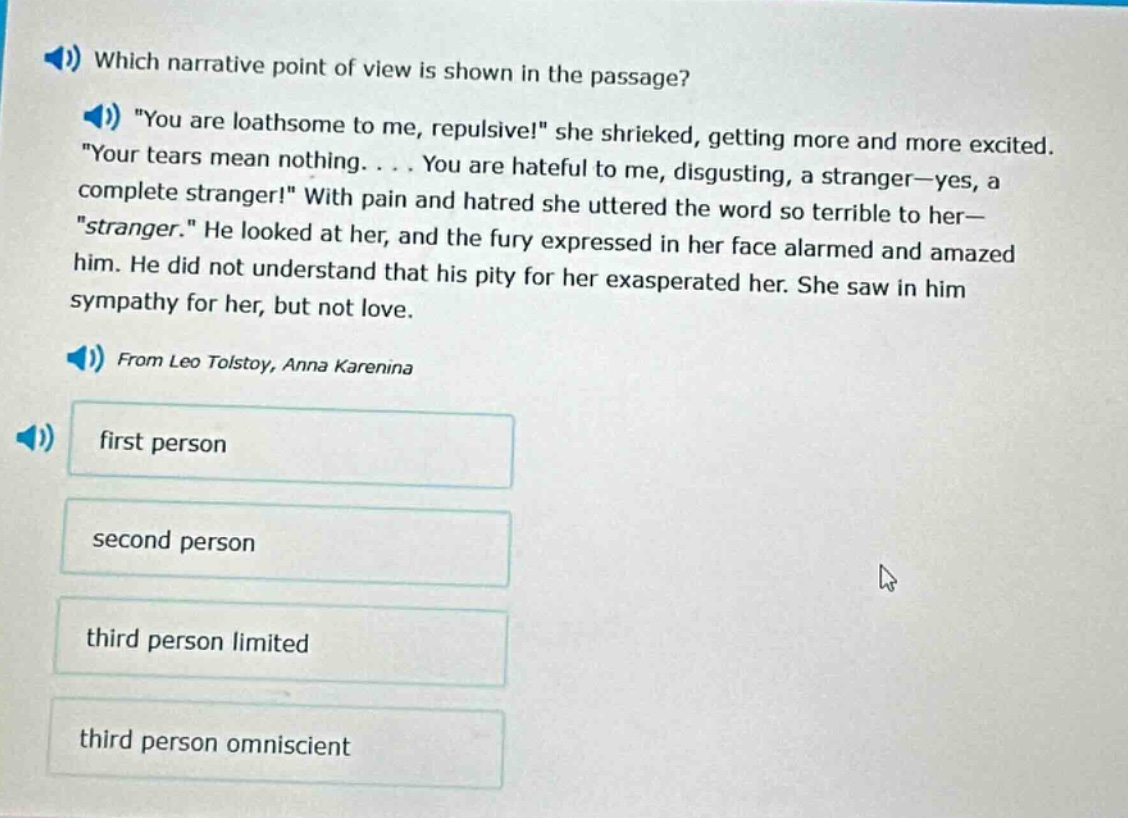
which narrative point of view is shown in the passage? \you are loathsome to me, repulsive!\ she shrieked, getting more and more excited. \your tears mean nothing. . . . you are hateful to me, disgusting, a stranger—yes, a complete stranger!\ with pain and hatred she uttered the word so terrible to her—\stranger.\ he looked at her, and the fury expressed in her face alarmed and amazed him. he did not understand that his pity for her exasperated her. she saw in him sympathy for her, but not love. from leo tolstoy, anna karenina first person second person third person limited third person omniscient
Answer
Brief Explanations:
The passage uses "he" and "she" to describe the characters' actions and thoughts without using "I" (first - person) or "you" (second - person) to tell the story from a personal or directly - addressed perspective. It focuses on the thoughts and feelings of specific characters, which is characteristic of third - person limited. Third - person omniscient would know the thoughts of all characters in a more all - encompassing way, which isn't the case here.
Answer:
C. third person limited