in part two of trifles, which of the following is an example of dramatic irony?\nthe audience knows mrs…
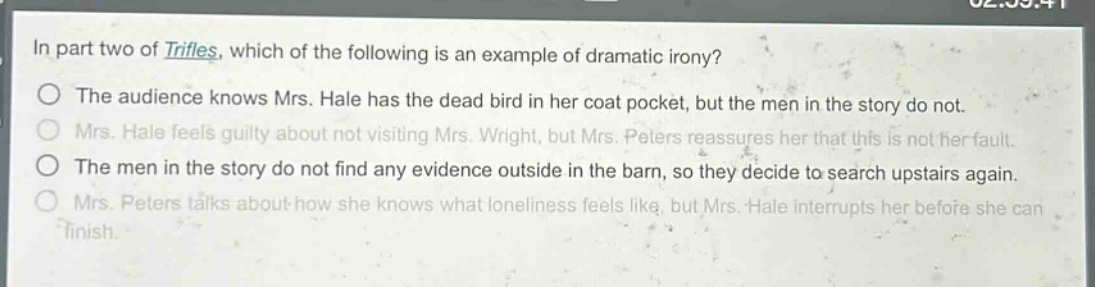
in part two of trifles, which of the following is an example of dramatic irony?\nthe audience knows mrs. hale has the dead bird in her coat pocket, but the men in the story do not.\nmrs. hale feels guilty about not visiting mrs. wright, but mrs. peters reassures her that this is not her fault.\nthe men in the story do not find any evidence outside in the barn, so they decide to search upstairs again.\nmrs. peters talks about how she knows what loneliness feels like, but mrs. hale interrupts her before she can finish.
Answer
Answer:
The audience knows Mrs. Hale has the dead bird in her coat pocket, but the men in the story do not.
Brief Explanations:
Dramatic irony occurs when the audience knows something the characters do not. Here, the audience's knowledge of the dead - bird in Mrs. Hale's pocket contrasts with the men's ignorance, creating dramatic irony.