read the dialogue from act ii, scene iv of romeo and juliet. romeo: thou wast never with me for anything…
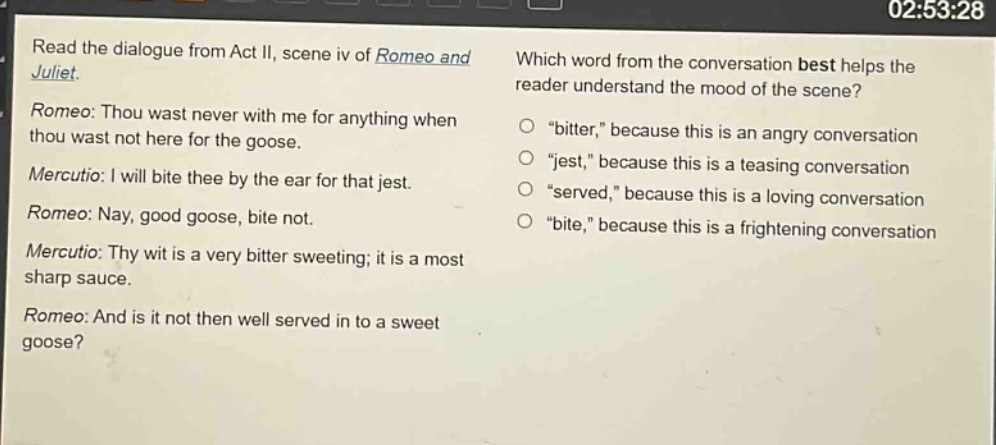
read the dialogue from act ii, scene iv of romeo and juliet. romeo: thou wast never with me for anything when thou wast not here for the goose. mercutio: i will bite thee by the ear for that jest. romeo: nay, good goose, bite not. mercutio: thy wit is a very bitter sweeting; it is a most sharp sauce. romeo: and is it not then well served in to a sweet goose? which word from the conversation best helps the reader understand the mood of the scene? \bitter,\ because this is an angry conversation \jest,\ because this is a teasing conversation \served,\ because this is a loving conversation \bite,\ because this is a frightening conversation
Answer
Brief Explanations:
The conversation between Romeo and Mercutio has a teasing tone. The word "jest" indicates they are joking around. "Bitter" implies anger which is not the mood. "Served" doesn't convey the mood. "Bite" alone doesn't suggest the teasing nature.
Answer:
"jest," because this is a teasing conversation